
by Apurva
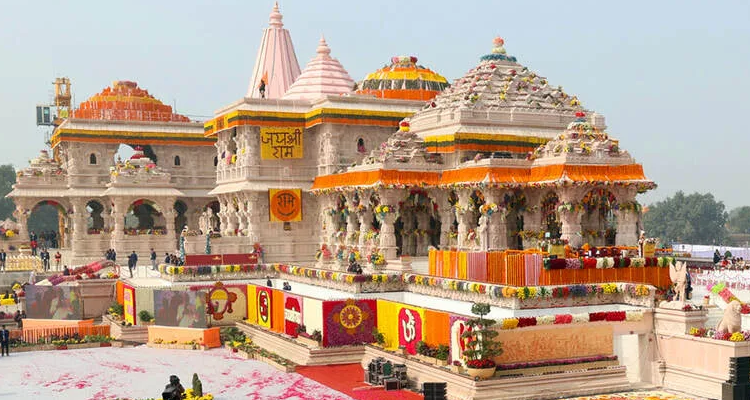
Ayodhya: A new study by the Indian Institute of Management (IIM) Lucknow has found that the Shri Ram Janmabhoomi Temple has triggered a sweeping economic upswing in Ayodhya, transforming the temple town into one of India’s fastest-growing religious tourism hubs.
The report, titled “The Economic Renaissance of Ayodhya: A Case Study on Sri Ram Mandir,” analyses the post-consecration impact of the temple on employment, business activity, infrastructure and local governance.
Pilgrim Footfall Fuels Growth
According to the study, Ayodhya has witnessed an extraordinary surge in visitors since the temple’s inauguration in January 2024. Annual footfall rose from roughly 1.7 lakh earlier to more than 11 crore within the first six months after opening, marking a massive jump in religious tourism.
Researchers note that this unprecedented influx of devotees has become the central engine of the city’s economic momentum.
Ayodhya: IIM Lucknow study reveals Ram Temple sparked economic renaissance with 11cr visitors in 6 months post-consecration, 5x trader income surge, property rates up 5-10x, 150+ new hotels, Rs20-24k cr tourism tax revenue, and 1.2 lakh jobs ahead.#news pic.twitter.com/W53yMuM8Cx
— Dharmic News (@dharmicnews) February 17, 2026
Local Incomes, Tax Collections Rise
The IIM-Lucknow team reported significant improvement in livelihoods across the city. Average daily earnings of small traders and shopkeepers have multiplied several times, while GST collections in the Ayodhya region have climbed to about ₹400 crore, indicating stronger formal economic activity.
The study further projects that, if the current trajectory continues, Ayodhya’s tourism economy could touch ₹10,000 crore annually by 2025-26.
Hospitality Sector Expands Rapidly
The report highlights rapid capacity building in the hospitality and services ecosystem. Hotel inventory in Ayodhya has expanded notably in recent years and is expected to grow further to meet sustained demand.
Alongside hotels, the researchers observed a sharp rise in restaurants, transport services, banking facilities, retail outlets and homestays — pointing to broad-based urban economic expansion.
Ground Survey-Based Findings
Led by Professor Venkataramanaiah Saddikuti, the study is based on extensive field surveys, stakeholder interactions and assessment of infrastructure and governance developments in the temple town.
The authors conclude that Ayodhya is fast emerging as a major spiritual tourism destination, with the Ram Temple acting as a powerful catalyst for what they describe as a new “temple-driven economic model.”
A Template for Heritage-Led Development
The study suggests that Ayodhya’s experience could become a reference point for other regions, demonstrating how faith-based heritage projects, when supported by planning and investment, can stimulate local economies and generate employment.