
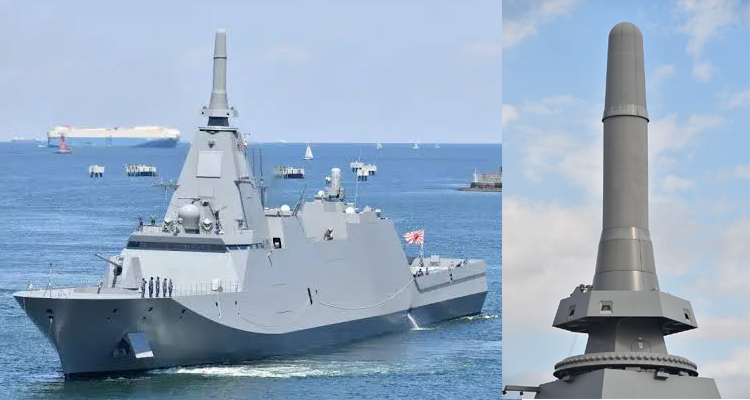
New Delhi: India and Japan have entered a new phase of strategic defence cooperation by announcing their first-ever joint defence co-development project, centered on the Unified Complex Radio Antenna (UNICORN)—an advanced integrated communication mast for naval warships. The landmark initiative was unveiled by Prime Minister Narendra Modi during the 16th India-Japan Annual Summit in New Delhi following talks with Japanese Prime Minister Sanae Takaichi.
Calling the agreement a “new chapter” in bilateral defence ties, Prime Minister Modi said the project reflects the growing trust between the two countries and their shared commitment to strengthening regional peace, maritime security and a rules-based Indo-Pacific.
PM @narendramodi, at Hyderabad House, New Delhi, noted that in today’s complex global landscape, trust is the most vital strategic asset. India and Japan are deepening their partnership by merging Japan’s precision technology with India’s software capabilities to accelerate AI… pic.twitter.com/0G0tlSCadx
— MyGovIndia (@mygovindia) July 2, 2026
A Major Milestone in Defence Partnership
The UNICORN project marks the first instance of India and Japan jointly developing defence equipment under their defence technology cooperation framework. While the two nations signed an agreement on the transfer of defence equipment and technology several years ago, this is the first collaboration to move into actual co-development and production.
The project builds upon the Memorandum of Implementation (MoI) signed in Tokyo in November 2024, formalising cooperation between the two governments for the joint development of the advanced naval communication system.
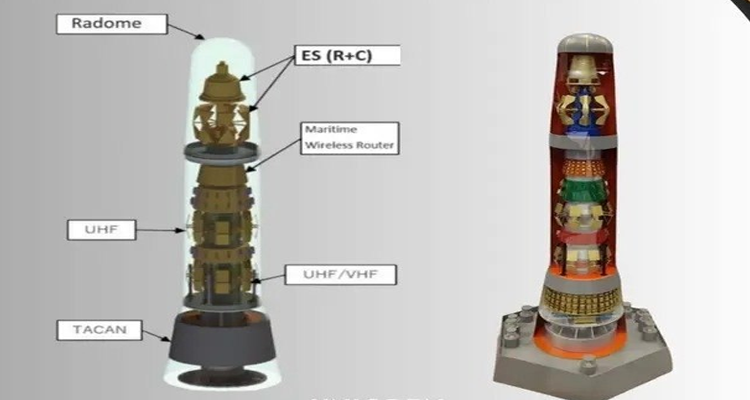
What is the UNICORN System?
UNICORN (Unified Complex Radio Antenna) is an advanced integrated mast that combines multiple communication antennas into a single enclosed structure, replacing the traditional arrangement of several exposed antennas mounted across a ship’s mast.
The technology offers several operational advantages:
- Improved stealth characteristics by reducing the ship’s radar cross-section.
- Enhanced communication capabilities through integrated systems.
- Lower electronic signature, making naval vessels harder to detect.
- Reduced maintenance requirements due to consolidated antenna architecture.
The technology was originally developed by Japanese companies for the Japan Maritime Self-Defense Force and is currently deployed on Japan’s modern Mogami-class frigates. Under the new agreement, the system will be adapted for future Indian Navy warships through joint development and manufacturing.
Bharat Electronics to Play Key Role
India’s leading defence electronics company, Bharat Electronics Limited (BEL), is expected to partner with Japanese agencies in integrating and manufacturing the UNICORN system for the Indian Navy.
The collaboration is expected to facilitate technology transfer, strengthen India’s indigenous defence manufacturing ecosystem and support the government’s ‘Aatmanirbhar Bharat’ initiative in the defence sector.
Strengthening the Indo-Pacific Vision
During the joint press conference, Prime Minister Modi said India and Japan would jointly develop defence technologies that contribute to regional peace, maritime security and a free, open and rules-based Indo-Pacific.
Japanese Prime Minister Sanae Takaichi echoed similar sentiments, describing India and Japan as two of the world’s largest democratic and market economies that share common strategic interests in ensuring regional stability and prosperity.
Both leaders reaffirmed their commitment to expanding cooperation in defence, economic security, critical technologies and resilient supply chains amid evolving geopolitical challenges in the Indo-Pacific.
Wider Strategic Cooperation
Beyond defence, the summit also witnessed the signing of multiple agreements covering:
- Artificial Intelligence cooperation
- Critical minerals and energy security
- Semiconductor collaboration
- Shipbuilding
- Geological exploration and resource development
- Economic security initiatives
These agreements reflect the rapidly expanding India-Japan Special Strategic and Global Partnership, which has evolved beyond infrastructure and investment into advanced technology, defence manufacturing and strategic resilience.
Strategic Significance
Defence analysts view the UNICORN project as a watershed moment in India-Japan relations. It signals Japan’s growing willingness to collaborate on advanced defence technologies with trusted partners and reinforces India’s ambition to become a major defence manufacturing hub.
For India, the project offers access to cutting-edge naval technology while promoting domestic production. For Japan, it represents a significant expansion of its defence industrial cooperation with a key Indo-Pacific partner.
As regional maritime competition intensifies, the collaboration is expected to enhance interoperability between the two countries’ navies and deepen strategic alignment in ensuring a secure and stable Indo-Pacific.
The launch of the UNICORN project is therefore not merely a defence agreement but a strategic milestone that underscores the growing convergence of India and Japan on security, technology and regional stability.