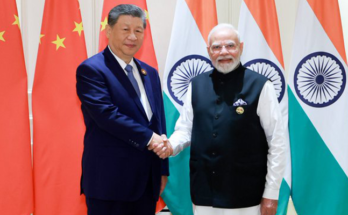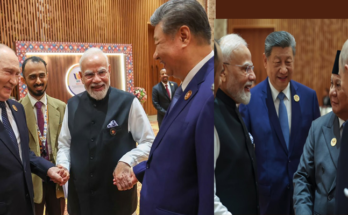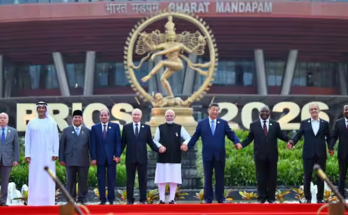

New Delhi: The 18th BRICS Summit 2026 concluded in New Delhi on September 13, 2026, with the expanded grouping seeking to turn its growing geopolitical weight into practical cooperation on global governance, trade, technology, health, climate and sustainable development.
Held under India’s chairship with the theme “Building for Resilience, Innovation, Cooperation and Sustainability,” the summit brought together the 11-member BRICS grouping at a time of heightened geopolitical tensions, trade disruptions and growing demands from the Global South for greater representation in international institutions.
The summit’s most important political outcome was the New Delhi Declaration, adopted unanimously by BRICS leaders. The declaration places renewed emphasis on reforming the global governance system, strengthening multilateralism and making international institutions more representative and responsive to the developing world.
Thank you to all BRICS leaders for making the Delhi Summit very productive and outcome oriented! pic.twitter.com/C3DMZWGgLL
— Narendra Modi (@narendramodi) September 13, 2026
1. A stronger push for global governance reform
Perhaps the clearest message from New Delhi was that the global institutions created in an earlier era need to reflect today’s economic and geopolitical realities.
The declaration calls for reforms to make the international system more just, equitable, representative, democratic, effective and accountable. BRICS reiterated its support for reform of the United Nations and other multilateral institutions, including the international financial architecture.
For India, this remains a central BRICS objective: giving the Global South a greater voice in institutions where decision-making power has historically been concentrated among a smaller group of countries.
2. BRICS chooses practical economics over a common currency
Despite years of speculation about a possible BRICS currency, the New Delhi Summit did not produce a decision to create a common BRICS currency.
Instead, leaders backed a more practical approach — encouraging greater use of national currencies in trade and investment and improving the interoperability of payment and messaging systems.
The BRICS Payment Task Force is examining ways to make national payment systems work more efficiently across borders. The New Development Bank is also expected to play a greater role in local-currency financing.
The message is clear: BRICS is moving incrementally towards reducing payment barriers rather than attempting an immediate alternative to the global monetary system.
3. A united call for a more multipolar world
The summit reinforced BRICS’ ambition to become a stronger platform for the Global South.
The declaration supports a more representative international order and stresses sovereign equality, dialogue, consultation and respect for international law.
This position assumes greater importance after BRICS’ expansion. The grouping now includes Brazil, Russia, India, China, South Africa, Egypt, Ethiopia, Indonesia, Iran, Saudi Arabia and the UAE, giving it a much wider geographical and political footprint.
The expanded grouping, however, also faces a difficult balancing act because its members have sharply different foreign-policy priorities.
4. West Asia exposes both BRICS’ strength and its limits
The ongoing conflict and instability in West Asia featured prominently in the summit discussions.
The New Delhi Declaration expressed serious concern over the escalation of violence and called for maximum restraint, dialogue and diplomatic solutions. BRICS also addressed conflicts and humanitarian crises in several regions.
But the summit also highlighted the limits of BRICS consensus. With countries such as Iran, Saudi Arabia and the UAE sitting within the expanded grouping, reaching a common position on sensitive geopolitical issues remains difficult.
That BRICS nevertheless managed to produce a unanimous declaration amid such differences was itself a significant diplomatic achievement.
5. Trade tensions and unilateral sanctions
BRICS leaders also raised concerns over unilateral tariff and non-tariff measures that they said could disrupt international trade and supply chains.
The declaration criticised measures that create distortions in global commerce and reiterated the importance of an open, predictable and rules-based multilateral trading system.
The issue is particularly significant for emerging economies facing higher trade uncertainty, supply-chain disruptions and geopolitical fragmentation.
6. AI becomes a major BRICS priority
Artificial intelligence emerged as one of the most forward-looking areas of cooperation.
The declaration calls for ethical, inclusive, secure and development-oriented AI, with particular attention to the needs of the Global South.
China also announced plans to take the lead in establishing a BRICS AI Open Source Zone, aimed at expanding cooperation on large language models, AI training and open AI ecosystems.
For BRICS, the AI agenda is not simply about technology. It is increasingly linked to economic competitiveness, digital sovereignty, skills, public infrastructure and development.
7. Health security gets a new push
Health cooperation was another important takeaway from India’s chairship.
Prime Minister Narendra Modi announced an initiative for an early warning system for infectious diseases, while the declaration highlighted cooperation on tuberculosis, antimicrobial resistance and non-communicable diseases.
India also proposed a BRICS health-focused Training Hub Network, with NIMHANS as a lead centre.
The emphasis reflects the lessons of the COVID-19 pandemic and the growing recognition that health security is closely connected to economic and national security.
8. Climate and sustainable development remain central
Sustainable development was placed at the heart of India’s BRICS chairship.
The New Delhi Declaration links economic growth with climate action, energy security, environmental protection and resilient development. Leaders also reaffirmed cooperation on food and energy security.
For developing countries, the challenge is to pursue faster economic growth without sacrificing environmental sustainability — an issue that is likely to remain central to BRICS discussions in the coming years.
9. India pushes innovation and industrial cooperation
India used its chairship to push BRICS towards more tangible economic and technological cooperation.
Among the initiatives highlighted was an India Centre for BRICS Industrial Competencies, aimed at supporting smart manufacturing and industrial capabilities.
India also promoted a proposed BRICS digital public infrastructure repository, along with mechanisms for sharing development experiences and policy expertise among member countries.
These initiatives fit into New Delhi’s broader effort to present BRICS not merely as a political grouping but as a platform capable of delivering practical development solutions.
10. The Global South moves closer to the centre of the BRICS agenda
One of the biggest takeaways from the summit is the continued transformation of BRICS from a small economic grouping into a broader platform representing the aspirations of emerging and developing economies.
The official declaration stresses deeper engagement with Emerging Markets and Developing Countries and welcomes greater participation by BRICS partner countries.
The bloc now represents a significant share of the world’s population and economic output, giving its collective voice increasing weight in debates over global finance, trade, technology and governance.
11. India’s diplomatic balancing act
The summit also demonstrated India’s ability to engage simultaneously with countries that have competing strategic interests.
New Delhi brought together major powers such as Russia and China alongside countries with close relations with the West. The adoption of a consensus declaration despite these differences underlined India’s emphasis on dialogue, flexibility and practical cooperation.
Prime Minister Modi repeatedly stressed that BRICS should focus on delivering concrete outcomes rather than becoming merely another forum for political statements.
12. China takes over the BRICS chair
With the conclusion of India’s 2026 chairship, China takes over as the next BRICS chair and will host the 19th BRICS Summit in 2027.
Chinese President Xi Jinping called for deeper cooperation among the expanded grouping, particularly in trade, AI, finance and supply-chain stability.
This transition could shape the next phase of BRICS, particularly as Beijing seeks to strengthen the bloc’s economic integration while India has emphasised practical, development-oriented cooperation.
The bigger takeaway: From rhetoric to results
The most important question after the New Delhi Summit is no longer whether BRICS can produce ambitious declarations. It is whether those declarations can be converted into measurable outcomes.
India’s chairship succeeded in keeping together an increasingly diverse grouping and secured consensus on a wide range of issues — from global governance reform and trade to AI, health, climate and sustainable development.
But BRICS still faces significant internal differences over geopolitics, economic priorities and relations with the West.
The New Delhi Summit therefore represents both an expansion of BRICS’ ambition and a test of its effectiveness.
The bloc has become larger, more influential and more politically diverse. Its next challenge is to prove that its growing weight can translate into institutions, payment systems, development projects, technological cooperation and diplomatic initiatives that deliver tangible benefits.
As Prime Minister Modi put it at the conclusion of the summit, the responsibility now is to turn the declaration’s commitments into time-bound, concrete action.
The New Delhi message is ultimately simple: BRICS wants a bigger voice in shaping the global order — but its credibility will increasingly depend on what it delivers, not merely what it declares.