
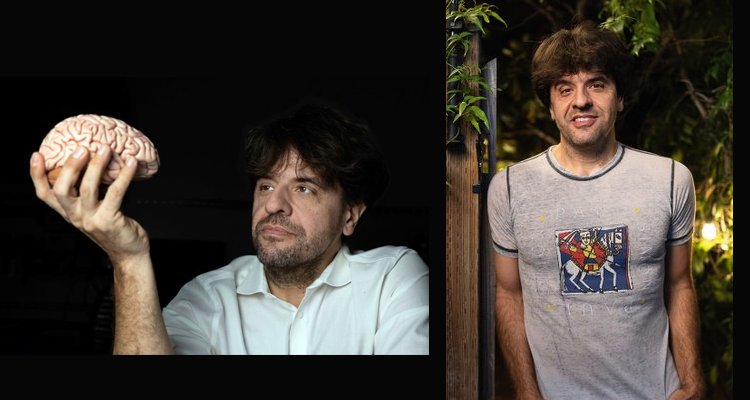
News Desk: American neuroscientist, psychiatrist and bioengineer Karl Deisseroth has been awarded the 2026 Nobel Prize in Physiology or Medicine, sharing the prestigious honour with German scientists Peter Hegemann and Georg Nagel.
The three scientists were recognised for pioneering discoveries involving light-gated ion channels and optogenetics, a breakthrough that has transformed the study of the brain and nervous system.
Deisseroth is best known for helping pioneer optogenetics, a revolutionary technique that enables scientists to control specific nerve cells using light. The method has given researchers an unprecedented ability to study how individual neurons and neural circuits influence movement, memory, emotions and behaviour.
Light Opens a New Window into the Brain
Optogenetics combines genetics with optics. Scientists introduce light-sensitive proteins, known as opsins, into selected nerve cells. When light is directed at these cells, researchers can precisely switch their activity on or off.
Neuroscientist Dr. Karl Deisseroth, awarded the Nobel Prize for medicine, says his work has helped scientists pinpoint brain cells involved in disorders like depression and Alzheimer’s https://t.co/zisHL6o4Cy https://t.co/AFCYWyBFQ7
— Reuters (@Reuters) October 5, 2026
The technique has become an important tool in modern neuroscience, allowing scientists to examine the functions of specific brain circuits in ways that were previously difficult or impossible.
Deisseroth’s research has also contributed to investigations into neurological and psychiatric conditions, including depression, autism, schizophrenia, epilepsy and Parkinson’s disease.
Who is Karl Deisseroth?
Deisseroth is the D.H. Chen Professor of Bioengineering and of Psychiatry and Behavioral Sciences at Stanford University and an investigator of the Howard Hughes Medical Institute.
He earned his undergraduate degree in biochemical sciences from Harvard University before completing his PhD in neuroscience and MD at Stanford University. He later completed medical internship and psychiatry residency training at Stanford and became board-certified in psychiatry.
Despite his distinguished research career, Deisseroth continues to practise psychiatry. His clinical work focuses particularly on affective disorders and autism-spectrum disorders, where treatment can involve medication and neural stimulation.
A Major Contribution to Neuroscience
Deisseroth played a central role in developing optogenetics into a practical research technology now used by neuroscience laboratories worldwide. The approach has allowed scientists to examine the relationship between specific neural circuits and complex behaviours with remarkable precision.
His work has helped bridge the gap between basic neuroscience and the study of brain disorders, offering researchers new approaches to understanding how abnormal neural activity may contribute to psychiatric and neurological diseases.
Karl Deisseroth: At a Glance
Born: November 18, 1971, Boston, Massachusetts
Undergraduate: Harvard University, Biochemical Sciences
PhD: Neuroscience, Stanford University, 1998
MD: Stanford University, 2000
Current position: D.H. Chen Professor of Bioengineering and Psychiatry and Behavioral Sciences, Stanford University
Fields: Neuroscience, psychiatry, bioengineering and optogenetics
With the 2026 Nobel Prize, Deisseroth’s pioneering work has received the highest international recognition in science, highlighting how the ability to control nerve cells with light has reshaped modern research into the human brain.