News Desk: China is quietly exploring options to expand its overseas military presence into South Asia, including Bangladesh and Myanmar, according to a new assessment by the United States Department of Defense—raising fresh strategic alarms in New Delhi.
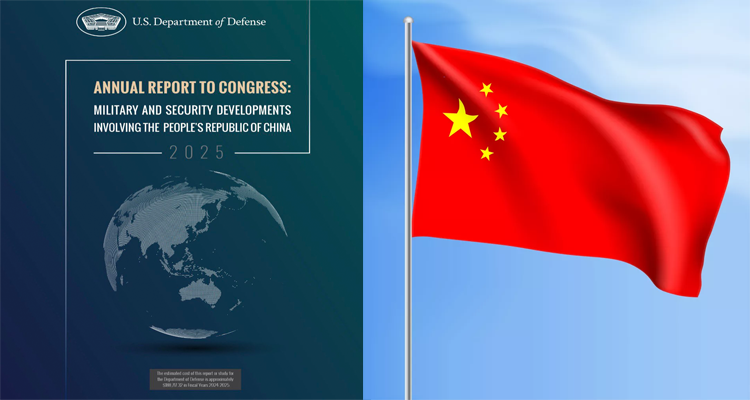
The United States Department of Defense in its latest annual report, Military and Security Developments Involving the People’s Republic of China (2025), says Beijing is considering additional overseas military facilities beyond its sole acknowledged base in Djibouti, East Africa.
Pentagon report says China is exploring overseas military bases, including potential facilities in Pakistan
Beyond Gabon, the Pentagon assessment says China has likely considered basing or military access arrangements in a wide range of countries, including Pakistan, Bangladesh,… pic.twitter.com/YcJJGia0vw
— WION (@WIONews) December 24, 2025
What the Pentagon Report Reveals
The report, submitted to the US Congress, notes that the People’s Liberation Army is assessing locations that could offer logistics, infrastructure, and access to support naval and air operations far from the Chinese mainland.
Among the most sensitive disclosures is the mention of South Asian countries—Bangladesh, Sri Lanka, and Myanmar—where China has “likely considered basing” arrangements. Pakistan is also listed but treated separately, given its long-standing defence and strategic alignment with Beijing.
While the Pentagon stops short of saying permanent bases are imminent, it underlines that even limited logistics hubs could significantly enhance China’s power projection across the Indian Ocean region.
Strategic Concerns for India
For India, the findings strike a nerve. Indian security planners have long viewed the Indian Ocean as a core strategic sphere, and any Chinese military footprint—formal or informal—in neighbouring countries is seen as a potential challenge.
Defence analysts link Beijing’s moves to the so-called “String of Pearls” strategy—an alleged effort to build a network of ports, facilities, and partnerships stretching from the South China Sea to Africa, aimed at securing sea lanes and expanding geopolitical influence. Facilities near the Bay of Bengal or routes leading to the Strait of Malacca could, experts say, allow China to position assets close to some of the world’s most critical maritime chokepoints.
India has already begun recalibrating. Recent years have seen stepped-up naval deployments, enhanced maritime surveillance, and stronger border and coastal security measures, particularly along the eastern seaboard and near Bangladesh-facing sectors.
Beijing Pushes Back
China has rejected claims that its overseas engagements amount to military expansion. Responding to similar assessments, the Chinese foreign ministry has accused Washington of “exaggeration and distortion,” insisting that Beijing’s defence posture is defensive in nature and rooted in long-term cooperation and mutual respect with regional partners.
Yet strategic experts argue that even exploratory discussions about bases or logistics facilities near India are enough to trigger counter-moves. “You don’t need a full-fledged base to change the balance,” one analyst noted. “Access, resupply, and presence alone can reshape regional security calculations.”
As great-power competition intensifies in the Indo-Pacific, the Pentagon report makes clear that China’s military ambitions are no longer confined to distant waters—but are edging ever closer to India’s neighbourhood.