‘Mountain Man’ Road Emerges as Symbol of Eternal Love
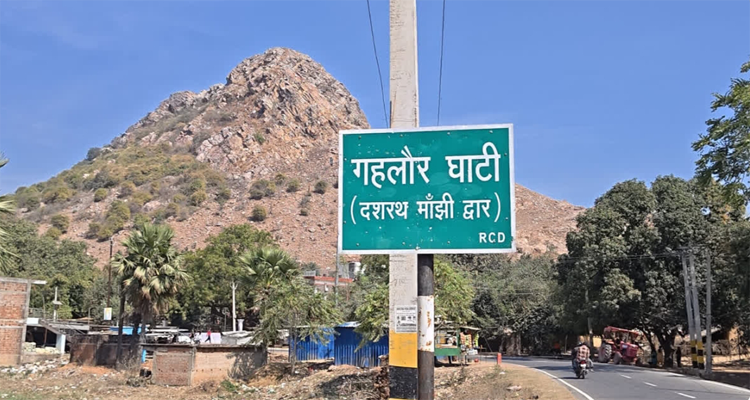
Gaya: In the quiet hills of Gehlour, an extraordinary love story continues to draw visitors from across India and beyond — many of whom say the “Path of Love” carved by the legendary “Mountain Man” Dashrath Manjhi is even more remarkable than the Taj Mahal.
More than six decades after his historic feat, Manjhi’s hand-cut mountain road has transformed the remote village into a powerful symbol of devotion, sacrifice and human determination.
A Love Story Etched in Stone
Dashrath Manjhi, a poor labourer, achieved what many still find unbelievable. Armed with only a hammer and chisel, he spent 22 relentless years (1960–1982) carving a passage through the Gehlour hill in memory of his wife Phalguni Devi.
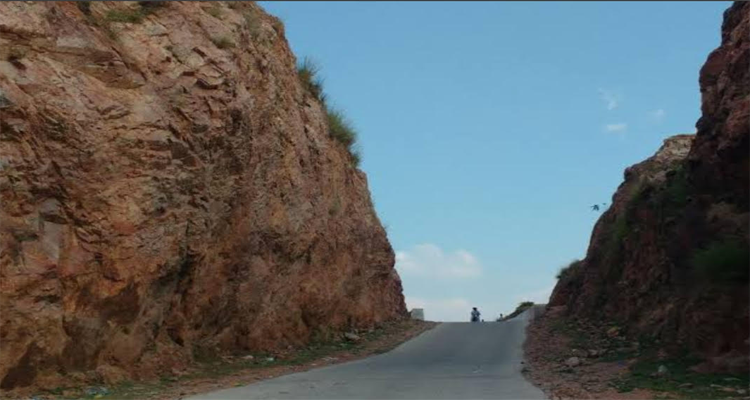
What began as personal grief turned into a historic act of resolve. Today, the narrow mountain cut — often called the “Path of Love” — stands as a living monument to one man’s devotion.
Valentine’s Day Sees Emotional Footfall
On Valentine’s Day especially, the memorial witnesses a surge of couples and visitors who come to pay tribute and seek inspiration from Manjhi’s story. Many describe the site as a “temple of love.”
Ragini Kumari, who visited with her husband Prabhat Singh, said they prayed for lifelong strength in their relationship after learning about Manjhi’s sacrifice.
“We were deeply moved. His love is immortal — we came seeking inspiration for our married life,” she said.
Visitors Compare It to the Taj Mahal
First-time visitor Dinesh Chaudhary from Begusarai called the site an “eternal symbol of love,” noting that people now travel from across the country and even abroad.
Pankaj Kumar, who came from Delhi, said seeing the place in person was transformative. “After coming here, I truly felt this surpasses even Shah Jahan’s Taj Mahal,” he remarked.
Ritesh Kumar from Rajasthan echoed the sentiment, pointing out that while the Taj Mahal was built by skilled artisans, Manjhi single-handedly carved a road through a mountain for his wife.
The Tragedy That Changed History
Family sources recount that Phalguni Devi used to cross the rugged hill daily to bring food and water to her husband. In 1959, she slipped on the rocky path and suffered fatal injuries. With the nearest hospital nearly 55 km away and no proper road, she could not receive timely treatment.
Devastated, Manjhi resolved that no one else should suffer because of isolation. Ignoring ridicule from villagers who called him mad, he began chiselling the mountain.
From Mockery to Monument
For 22 years, Manjhi worked alone, eventually cutting through a 360-foot-high and 30-foot-wide section of the Gehlour hill. His effort dramatically reduced the distance between villages and the nearest town.
Today, Gehlour Valley has emerged as a nationally recognised heritage spot. Prominent personalities, including actor Aamir Khan and Bihar Chief Minister Nitish Kumar, have visited the site.
An Enduring Symbol
What started as a grieving husband’s vow has become one of India’s most powerful human stories. For many visitors, the Gehlour “Path of Love” is not just a road through a mountain — it is a reminder that true love, backed by determination, can literally move mountains.