
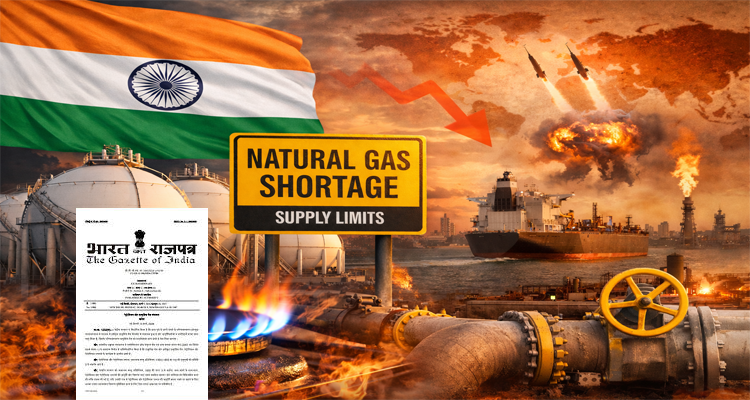
News Desk: India has introduced emergency guidelines to regulate natural gas distribution as global supply disruptions triggered by the ongoing conflict between Iran and the United States begin to impact energy markets across Asia.
The Ministry of Petroleum and Natural Gas has issued a new framework that classifies natural gas consumption into four priority levels, ensuring that essential sectors continue to receive adequate supply while non-critical users face temporary restrictions.
The government said the measures are aimed at managing supply shortages caused by disruptions in international gas shipments, particularly in the Strait of Hormuz, one of the world’s most crucial energy transit routes.
Four-Tier Gas Allocation System
Under the revised guidelines, gas distribution has been organised into four priority categories.
Essential Supply – 100% Allocation
Domestic piped natural gas for households, compressed natural gas used in public transport, LPG production, pipeline compressor fuel, and other essential pipeline operations will continue to receive 100 percent of their average consumption over the past six months.
Fertiliser Sector – 70% Allocation
Gas supply to fertiliser plants will be maintained at around 70 percent of their recent average consumption, ensuring continued production for the agricultural sector.
Industrial Consumers – 80% Allocation
Industries connected to the National Gas Grid, including tea processing units and manufacturing facilities, will receive about 80 percent of their average gas usage.
Commercial and Industrial Distribution Networks – 80% Allocation
City gas distribution networks have been directed to maintain 80 percent supply to industrial and commercial consumers through their pipeline systems.
Energy Experts Warn of Cost Pressures
Energy economist Kirit Parekh said that while the shortage could increase the cost of electricity generation, India still has sufficient capacity to maintain power supply.
He noted that industries heavily dependent on natural gas—such as hydrogen production—may need to optimise usage and explore alternatives like electricity-based processes, though these options could be more expensive.
Impact of Middle East Conflict
The supply challenge comes amid escalating tensions in the Middle East that have disrupted shipping routes and energy infrastructure. The Strait of Hormuz, a vital corridor for global oil and gas shipments, has remained a conflict zone for weeks, affecting tanker movements and energy exports.
Reports indicate that hundreds of cargo vessels are stranded at ports across the region, delaying deliveries of natural gas to key Asian markets.
India is particularly vulnerable to such disruptions as it imports nearly half of its natural gas requirements from international suppliers. A significant portion of these imports comes from Qatar, one of the world’s largest LNG exporters.
The situation worsened after attacks on gas facilities in Qatar forced QatarEnergy to suspend production temporarily, tightening global supply and adding pressure on importing countries.
Temporary Measures to Stabilise Supply
Government officials emphasised that the gas allocation framework is a temporary measure designed to manage short-term disruptions in global supply. Authorities will continue to monitor international developments and adjust domestic distribution if necessary to protect essential consumption.
By prioritising household, transport and fertiliser sectors, India aims to safeguard critical economic and social activities while navigating the ongoing global energy crisis.