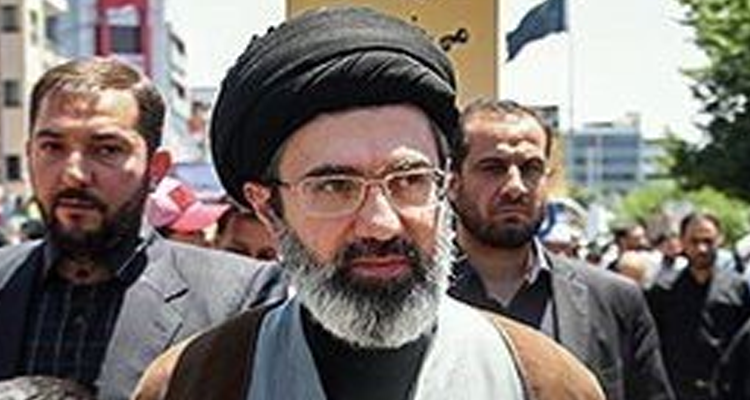
Tehran: Iran has entered a new phase of political leadership as the powerful Assembly of Experts formally appointed Ayatollah Seyyed Mojtaba Hosseini Khamenei as the third Supreme Leader of the Islamic Republic, following the death of his father Ayatollah Ali Khamenei during reported U.S.–Israel strikes amid escalating tensions in the Middle East.
The decision was taken after deliberations by the Assembly of Experts, the clerical body constitutionally responsible for selecting the country’s supreme leader. In an official statement, the Assembly said that after extensive consultations and a decisive vote, Mojtaba Khamenei had been chosen to lead the Islamic Republic.
Iran’s Assembly of Experts named Mojtaba Khamenei to replace his father, Ayatollah Ali Khamenei, as the country’s new supreme leader, signaling that hardliners remain firmly in charge https://t.co/DQoATqJsHX pic.twitter.com/1PUSupfkoJ
— Reuters (@Reuters) March 9, 2026
The statement added that the appointment was made under Article 108 of Iran’s Constitution, which grants the Assembly the authority to select and oversee the supreme leader.
The official account associated with the late leader also confirmed the development, announcing that the Assembly had formally introduced Mojtaba Khamenei as the new leader of the Islamic Republic.
The representatives of the Assembly of Experts appointed and introduced Ayatollah Sayyid Mojtaba Hosseini Khamenei (may God protect him) as the Third Leader of the Sacred Islamic Republic of Iran under Article 108 of the Constitution. pic.twitter.com/gZgvEI7Ds2
— Khamenei Media (@Khamenei_m) March 8, 2026
A Historic Leadership Transition
The appointment marks a rare and historic shift in Iran’s political structure, as leadership effectively passes from father to son — an unprecedented development in the country’s post-1979 Islamic Revolution history.
Mojtaba Khamenei, long regarded as a powerful yet largely behind-the-scenes figure within Iran’s political establishment, has been considered a potential successor for years due to his close ties with influential religious and security circles.
From Influential Insider to Supreme Leader
Born in 1969, Mojtaba Khamenei pursued religious studies in the seminary city of Qom and reportedly served during the later stages of the Iran–Iraq War between 1987 and 1988.
Over the years, he built a strong network within Iran’s political and security establishment. Analysts have often linked him to key roles in coordinating with the Islamic Revolutionary Guard Corps (IRGC) and overseeing the Basij militia.
The Basij force played a controversial role in suppressing large-scale protests that erupted following Iran’s disputed 2009 presidential election.
Leadership at a Time of Regional Crisis
Mojtaba Khamenei takes charge at a particularly volatile moment for Iran and the broader Middle East, with tensions running high following recent military confrontations involving Iran, Israel and the United States.
Despite the tense geopolitical environment, supporters of the Islamic Republic poured onto the streets in several Iranian cities after the announcement, celebrating the appointment of the new supreme leader and expressing loyalty to the country’s leadership.
His elevation is widely seen as a signal of continuity within Iran’s conservative power structure, though it also raises fresh questions about the country’s political future and its role in an increasingly unstable regional landscape.