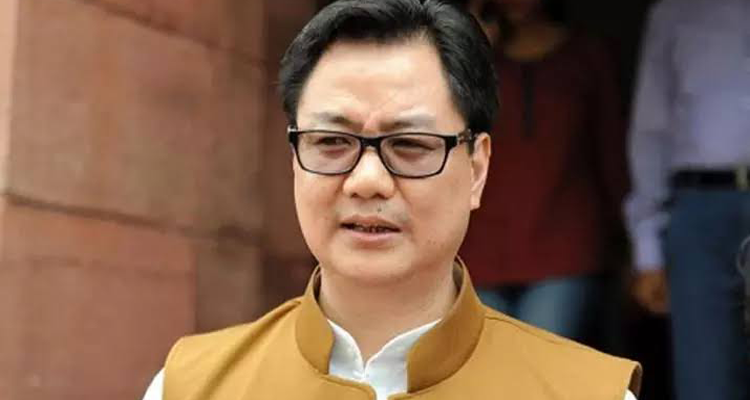
New Delhi: A day after Prime Minister Narendra Modi warned of a “new enemy” in the form of “dimagi naxals”, Union Parliamentary Affairs Minister Kiren Rijiju sought to clarify what the government means by the term, saying it was not directed at Opposition leaders.
In a post on X on Sunday, Rijiju said the term refers to people who allegedly support Maoist ideology, reject the Indian Constitution, back separatism or seek to sever the Northeast from the rest of the country.
What are ‘Dimagi Naxals’?
Rijiju outlined the categories he said fall under the term:
- Those who support Maoists and reject the Indian Constitution.
- Those who support separatists and back Article 370.
- Those who seek to sever the Northeast from India by cutting the ‘Chicken’s Neck’ corridor, the strategically important Siliguri Corridor connecting the Northeast with the rest of the country.
Rijiju’s post itself displayed the categories as points 1, 2 and 4, apparently leaving out point 3. The minister also shared an old video clip involving former JNU scholar and activist Sharjeel Imam, referring to his remarks about the possibility of cutting off the Northeast from the rest of India. Rijiju said that those who support people making such statements would fall within the “dimagi naxal” category.
PM @narendramodi ji didn’t say opposition leaders as Dimagi Naxals. Only following are Dimagi Naxals:
1. Who support Maoists and reject Indian Constitution.
2. Who stand with separatists & support Article 370.
4. Who want to cut chicken neck to separate North-East from India.— Kiren Rijiju (@KirenRijiju) August 16, 2026
Only those who support these kind of people are called “Dimagi Naxals”. pic.twitter.com/Gtcmj7rLfL
— Kiren Rijiju (@KirenRijiju) August 16, 2026
What did PM Modi say at the Red Fort?
The controversy follows Prime Minister Narendra Modi’s Independence Day address from the Red Fort on August 15.
While highlighting the government’s claim that armed Naxalism has been substantially eliminated, Modi said that people with a Naxal mindset still exist in different parts of the country. He described them as “dimagi naxals” and warned that they were looking for opportunities to promote violence and push society in what he called a wrong direction.
Modi said such elements needed to be “identified and isolated” so that India’s youth could be brought together for the country’s development.
The Prime Minister’s remarks came as he contrasted the decline of armed Naxalism with what he portrayed as a continuing ideological challenge. The warning has since triggered a political controversy over the meaning and scope of the new terminology.
Opposition hits back
The Opposition has strongly criticised the use of the term. Congress leader Jairam Ramesh described the reference to “dimagi naxals” as another label for political opponents, drawing a comparison with the earlier use of the phrase “urban naxals.”
Senior Congress leader P. Chidambaram took a more pointed swipe at the Prime Minister, saying on social media that he was “proud” to be a “dimagi naxal”.
The debate has also drawn reactions from groups representing young protesters. The Cockroach Janta Party (CJP), which had been involved in protests over examination-related issues, questioned whether educated young people could be branded Naxals merely for questioning the government.
Government draws distinction from ‘urban Naxal’ terminology
The latest controversy has also revived debate over the phrase “urban Naxal.” Interestingly, the government had earlier clarified in Parliament that the Ministry of Home Affairs did not officially use that expression.
In 2020, then Minister of State for Home Affairs G. Kishan Reddy told the Rajya Sabha that the phrase “Urban Naxalites” was not used by the Union government, although its policy against Left-Wing Extremism covered Maoist activities in all forms, including urban activities. A similar clarification was reportedly given in Parliament in 2022.
A new political flashpoint
Rijiju’s clarification appears aimed at narrowing the meaning of the term and countering the Opposition’s claim that Modi was branding political rivals as “dimagi naxals.” His explanation instead focuses on Maoist support, rejection of the Constitution, separatism and threats to India’s territorial integrity.
However, the political dispute is unlikely to end with the clarification. The phrase “dimagi naxal” has quickly emerged as a fresh flashpoint in the country’s political discourse, with the government presenting it as a warning against ideological support for extremism and the Opposition arguing that such labels could be used to delegitimise dissent.
In essence, the government says the target is not ordinary political disagreement but support for Maoism, separatism and activities allegedly aimed at weakening India’s constitutional and territorial integrity.