
News Desk: Pakistan has rolled out sweeping austerity measures — including salary cuts for ministers, fuel restrictions and temporary school closures — as the government attempts to cushion the economic shock triggered by the rapidly escalating conflict in West Asia and the resulting surge in global oil prices.
Prime Minister Shehbaz Sharif directed the emergency steps after chairing a high-level meeting in Islamabad, warning that the ongoing geopolitical crisis could severely strain Pakistan’s fragile economy and energy supplies.
15 emergency austerity measures annouced by Pakistan Prime Minister Shehbaz Sharif as oil crisis hits Pak pic.twitter.com/ezui7EqOmH
— Megh Updates 🚨™ (@MeghUpdates) March 9, 2026
Government Moves to Cut Spending and Save Fuel
Under the new measures, the federal government will reduce salaries and allowances for ministers and senior officials as part of a broader austerity drive. Government departments have been instructed to sharply curtail fuel usage and limit non-essential travel.
Authorities are also pushing energy-saving measures across public institutions, including restricted use of official vehicles and tighter monitoring of fuel consumption.
In addition, schools in several regions may remain temporarily closed or operate on revised schedules to reduce electricity demand and conserve energy during peak hours.
Officials say the measures are aimed at reducing the pressure on Pakistan’s foreign exchange reserves and controlling the rising cost of importing fuel.
Pakistan to close schools, take other measures to cut energy as oil spikes https://t.co/nGe0vd0BhL
— Reuters Asia (@ReutersAsia) March 9, 2026
Oil Prices Surge as West Asia Conflict Widens
The economic emergency comes amid an expanding regional conflict involving Iran and Israel following coordinated strikes reportedly carried out by Israel and the United States on Iranian targets earlier this year.
Since the outbreak of the hostilities on February 28, the confrontation has spread beyond the two countries, with attacks and retaliatory strikes reported across several West Asian states including Saudi Arabia, Bahrain, Iraq and Kuwait.
Preliminary estimates suggest that more than 1,300 people have been killed in Iran since the conflict began, while at least 11 people have died in Israel. The violence has also claimed the lives of six American soldiers and nine civilians across Gulf countries.
Energy Infrastructure Targeted in Gulf
The conflict has already begun to affect key oil installations across the region, raising fears of prolonged supply disruptions.
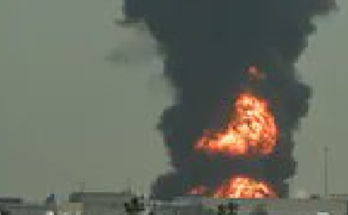
Iranian strikes reportedly hit Bahrain’s Al Ma’ameer oil facility, causing a fire and significant damage to infrastructure. Bahrain’s state energy company later declared force majeure following attacks on major installations.
Saudi Arabia said its air defence systems intercepted a drone targeting the strategic Shaybah oil field, condemning Iranian retaliation as “reprehensible”.
Authorities in Bahrain also reported that a drone attack on Sitra Island injured more than 30 civilians. Meanwhile, Israel said it struck Iranian security command centres and missile launch sites in central Iran as both sides continued to exchange missile fire.
Explosions were also reported in Doha as Qatar, Saudi Arabia, the United Arab Emirates and Kuwait activated air defence systems amid fears of further aerial attacks.
Pakistan Braces for Economic Fallout
For Pakistan — a country heavily dependent on imported energy — the widening crisis in the Gulf poses a major economic risk. Rising oil prices could worsen inflation, increase import bills and put additional pressure on the country’s already strained fiscal position.
Government officials say further energy-saving measures may be introduced if the crisis continues and global oil markets remain volatile.
Analysts warn that prolonged instability in the Gulf — home to some of the world’s largest oil producers and critical shipping routes — could trigger wider economic repercussions for energy-importing nations across Asia, including Pakistan.