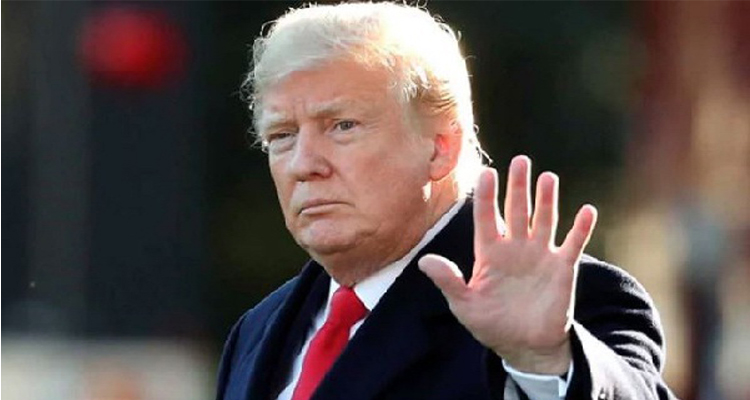
Washington: US President Donald Trump has moved quickly to impose a new 10 percent global tariff on imports, just hours after the US Supreme Court struck down his earlier sweeping tariff policy.
Announcing the decision on Truth Social, Trump said he had signed the order from the Oval Office and that the new tariff would take effect almost immediately. The move came in response to a 6–3 Supreme Court ruling that found the administration had overstepped its authority by using emergency powers to impose broad trade duties.
🚨 President Donald J. Trump imposes a 10% global tariff on all countries. pic.twitter.com/42ZGDnMxbR
— The White House (@WhiteHouse) February 20, 2026
Court Ruling Forces Policy Shift
The court made it clear that the US Constitution gives Congress — not the president — the power to impose taxes and tariffs. Judges said the emergency law cited by the administration was meant for genuine national crises, not routine trade policy.
Trump strongly criticised the verdict, calling it “outrageous” and warning that it would hurt American workers. He reiterated that tariffs remain central to his strategy for cutting trade deficits and protecting domestic industries.
🚨 President Donald J. Trump imposes a 10% global tariff on all countries. pic.twitter.com/42ZGDnMxbR
— The White House (@WhiteHouse) February 20, 2026
New Route: Trade Act Provision
To keep tariff pressure in place, the White House pivoted to Section 122 of the Trade Act of 1974. Under this rarely used provision, the president can impose duties of up to 15 percent for a maximum of 150 days to address serious balance-of-payments concerns.
The administration has formally ended the earlier emergency-based tariffs that the court invalidated. Those duties had ranged widely — from 10 percent to as high as 50 percent — depending on the country and product.
Because the new measure is temporary, any extension beyond 150 days would require approval from Congress.
More Trade Actions Ahead
At the same time, Washington has launched fresh country-specific investigations under Section 301, which targets what the US considers unfair trade practices by foreign governments. Probes involving China and Brazil are already in motion, and other major trading partners could face scrutiny.
Trump has also signalled that his administration may use national security provisions under Section 232 — previously applied to steel, aluminium and automobiles — to maintain tariff leverage.
US Treasury Secretary Scott Bessent has sought to calm markets, saying the new framework should keep overall tariff revenues broadly stable, although disputes over refunds from earlier collections could drag on in court.
What It Means for India
For Indian exporters, the Supreme Court ruling has effectively reset US duties to normal most-favoured-nation levels, previously averaging about 3 percent. Once the new global tariff kicks in, many Indian goods are expected to face an effective duty of around 10 percent during the 150-day period.
Some products — including mobile phones and pharmaceuticals — are likely to remain exempt.
However, the policy reset narrows the tariff edge India had recently gained over several South and Southeast Asian competitors in the US market.
Trade Deal Still Alive
Despite the legal setback, Trump has insisted that the broader trade engagement with India remains on track, describing bilateral ties as strong.
Indian officials are taking a wait-and-watch approach, saying New Delhi will closely monitor how the revised US tariff regime is implemented. Work on an interim trade pact is continuing, but policymakers expect continued uncertainty around US tariff policy in the near term.
Confusion Over Impact on Trade Partners
Washington: Fresh uncertainty has surfaced over how US President Donald Trump’s new 10 percent global tariff will affect countries that already have trade understandings with Washington.
A senior White House official indicated that the tariff is likely to reset duty levels for major trading partners. If implemented uniformly, India — which is yet to finalise the detailed trade pact with the US — could see effective tariffs on many exports ease to about 10 percent from the earlier indicated 18 percent.
Trump Says “Nothing Changes”
Trump, however, struck a different tone soon after the Supreme Court ruling. Speaking to reporters, he insisted the India–US trade dynamics remain unchanged and said his administration would find alternative legal routes to maintain tariffs.
“Nothing changes. They’ll be paying tariffs, and we will not be paying tariffs,” he said.
Mixed Signals Keep Markets Guessing
Earlier discussions between the two countries had pointed to a reduction in US tariffs on Indian goods to around 18 percent from the earlier peak levels. But Trump’s latest global tariff order — signed later — has clouded the picture.
With the White House hinting at a broad reset and Trump maintaining the status quo, exporters and policymakers are now in wait-and-watch mode as clarity on the final tariff structure is still awaited.