
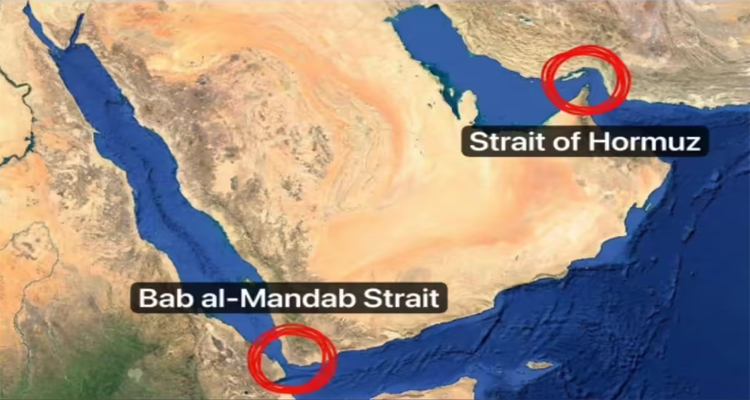
News Desk: Tensions in West Asia are rapidly escalating, with Iran indicating that its strategic pressure may not remain limited to the Strait of Hormuz. After signalling restrictions in one of the world’s busiest oil corridors, Tehran has now warned of possible action targeting the Bab el-Mandeb Strait—raising fears of a wider disruption to global shipping and energy supplies.
A Second Chokepoint in Focus
The Bab el-Mandeb Strait, often referred to as the “Gate of Tears,” connects the Red Sea to the Gulf of Aden and serves as a vital gateway for trade moving towards the Suez Canal. Any instability here could severely impact international shipping routes linking Asia, Europe, and Africa.
Iran’s warning suggests that if tensions intensify—particularly in the event of military action against its key energy infrastructure—it may respond by expanding the conflict to this critical maritime corridor.
#BREAKING: Iran threatens to disrupt the Bab el-Mandeb Strait, a key Red Sea chokepoint, as a ‘second front’ if US/Israel launch ground or naval attacks on Iranian territory or islands.
Strait of Hormuz remains effectively closed amid ongoing conflict. Oil prices volatile.… pic.twitter.com/YrBNkM5aDU
— Public News X (@PublicNewsX) March 26, 2026
Strategic Ripple After Hormuz
The development comes amid heightened concerns over the Strait of Hormuz, through which a significant portion of the world’s oil supply passes. Even limited disruption there has already triggered volatility in global energy markets.
By hinting at Bab el-Mandeb as a second pressure point, Iran appears to be signalling a broader strategy—one that could stretch global supply chains across multiple fronts simultaneously.
Red Sea Risks and Proxy Dynamics
Security analysts point to the growing risk in the Red Sea, where Iran-backed groups have previously targeted commercial vessels. These actors, positioned near the Bab el-Mandeb route, could play a decisive role in escalating maritime threats without direct state confrontation.
Such tactics could make the passage unsafe for shipping even without an official blockade, forcing companies to reroute vessels and incur heavy costs.
Global Trade and Energy at Stake
A simultaneous threat to both Hormuz and Bab el-Mandeb would create what experts describe as a “double chokepoint” crisis. The consequences could be far-reaching:
- Sharp spikes in oil and gas prices
- Disruptions in cargo and container shipping
- Delays in supply chains affecting multiple industries
- Increased insurance and freight costs
For energy-import dependent countries like India, the impact could be immediate and significant.
A Region on the Brink
With major powers increasing their military presence and regional hostilities intensifying, the risk of miscalculation remains high. Iran’s latest signals indicate that the conflict could expand beyond conventional boundaries—bringing key global trade routes directly into the line of fire.
As the situation unfolds, the Bab el-Mandeb Strait is emerging as a potential second flashpoint—one that could transform a regional standoff into a global economic shock.