
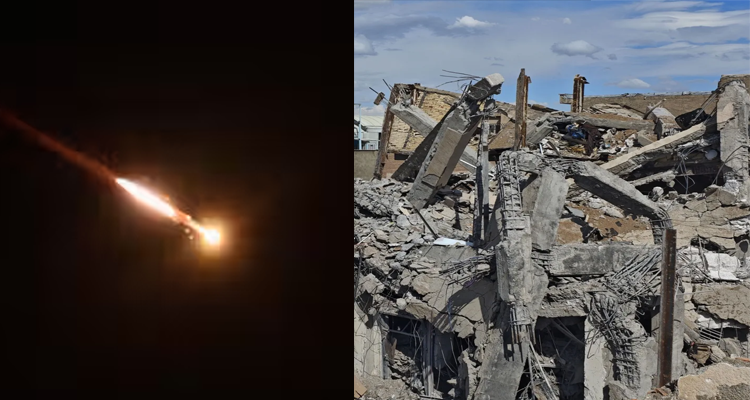
News Desk: The West Asia conflict has entered a volatile new phase, with intensifying airstrikes, mounting casualties, and urgent global efforts to prevent a wider regional war.
Israel has sharply escalated its offensive, striking two major nuclear facilities and key steel plants inside Iran—signalling a significant expansion of the battlefield. Iran’s Foreign Minister Abbas Araghchi condemned the attacks, warning of “heavy” retaliation and raising fears of a broader military confrontation.
The escalation comes despite earlier remarks by US President Donald Trump suggesting a temporary pause on strikes targeting Iran’s energy infrastructure. While Washington maintains that negotiations are progressing, developments on the ground point to a rapidly widening conflict.
Diplomacy in Overdrive
Backchannel diplomacy remains active amid the crisis. Pakistan’s Foreign Minister Ishaq Dar confirmed that Islamabad is facilitating communication between US and Iranian officials, with Turkey and Egypt also stepping in to support de-escalation efforts.
Rising Human Cost
The humanitarian situation continues to deteriorate. Iran’s Deputy Health Minister Ali Jafarian reported at least 1,937 deaths from US-Israeli strikes. In Lebanon, Israeli evacuation orders south of the Zahrani River come as fatalities cross 1,100 since early March.
Houthis Enter the Fray
In a major development, Yemen’s Iran-aligned Houthi forces have signalled direct entry into the conflict. For the first time since the war began, a missile was launched from Yemen toward Israel, according to the Israeli military.
The Houthis—long-time allies of Tehran—had previously warned of intervention if US and Israeli strikes continued. “Our fingers are on the trigger,” the group declared, threatening direct military action and warning against the use of the Red Sea for operations against Iran.
Iran-backed groups in Iraq and Lebanon are already engaged, raising concerns of a multi-front regional war.
US Signals Limited Engagement
US Vice President JD Vance indicated that Washington aims to exit the conflict “soon,” ruling out a prolonged war and describing the current impact—including on fuel prices—as temporary.
However, US Secretary of State Marco Rubio struck a more assertive tone, stating that American objectives—including crippling Iran’s naval, air, and missile capabilities—are being achieved “ahead of schedule,” and notably without deploying ground troops.
Rubio’s remarks come as the US has reinforced its regional presence with an additional 1,000 personnel, underscoring preparedness for further escalation even as it publicly avoids a long-term war commitment.
With new actors entering the battlefield, casualties rising, and conflicting signals from global powers, the West Asia war is fast evolving into a broader regional crisis—where diplomacy is struggling to keep pace with the guns.