News Desk: In a dramatic escalation in the Persian Gulf, Iran’s elite Islamic Revolutionary Guard Corps (IRGC) on Wednesday intercepted and seized two foreign cargo vessels—one reportedly bound for India—while targeting a third in the strategic Strait of Hormuz. The move has intensified fears over the stability of the recently extended US-Iran ceasefire and raised fresh alarm for global shipping routes.
Three Ships Targeted, Two Taken to Iranian Coast
According to maritime security reports, three commercial vessels—Epaminondas (Liberia-flagged), MSC Francesca (Panama-flagged), and Euphoria—came under Iranian action while transiting one of the world’s busiest oil and trade corridors.
The IRGC confirmed that Epaminondas, which had declared India as its destination, along with MSC Francesca, were seized and escorted toward Iranian territorial waters. The third vessel, Euphoria, was intercepted mid-sea but later released.
⚡️🇮🇷
Iran’s IRGC Navy has released a video showing its personnel capturing two container vessels in the Strait of Hormuz one Indian and another foreign vessel.
Indians are getting a taste of betraying Iran. pic.twitter.com/N8ucJsdQU4
— StrategicPulse (@Strategic_Puls) April 23, 2026
Gunfire, Interception, and Mid-Sea Disruption
The UK-based United Kingdom Maritime Trade Operations (UKMTO) reported that the first incident occurred roughly 15 nautical miles northeast of Oman, where Epaminondas came under gunfire. The attack caused visible damage to the ship’s bridge, raising serious safety concerns.
Hours later, Euphoria was halted about eight nautical miles west of Iran. Though no injuries or structural damage were reported, the forced stoppage added to the disruption in the already volatile corridor. Details regarding the extent of the incident involving MSC Francesca remain limited.
Iran Seizes Two Ships In Hormuz, Fires On Vessels In First Such Action Since War Began#Iran #Hormuz #westasiaconflict https://t.co/1xDX2hchPL
— News18 (@CNNnews18) April 23, 2026
Iran Justifies Action, Cites Maritime Violations
In its official statement, the IRGC Navy claimed the vessels had breached maritime regulations by operating without proper authorization and allegedly manipulating navigation systems.
“Maintaining order and safety in the Strait of Hormuz is a red line,” the force asserted, defending the seizures as necessary enforcement.
Shipping data appears to partially support Iran’s claims, indicating that at least two vessels had incomplete or irregular tracking transmissions while crossing the strait—an issue often flagged in high-risk maritime zones.
Ceasefire Under Strain as Diplomatic Uncertainty Grows
The maritime confrontation comes within hours of US President Donald Trump announcing an extension of the fragile ceasefire with Iran to allow further diplomatic engagement.
However, uncertainty clouds the next round of talks, reportedly proposed in Islamabad. Iran has not officially confirmed its participation, while US Vice President JD Vance has reportedly postponed his visit—signaling possible friction behind the scenes.
Meanwhile, US naval activity in the region has intensified. In recent days, American forces have seized an Iranian-linked vessel in the Gulf of Oman and intercepted two others in the Indian Ocean, suggesting a broader strategic standoff is unfolding.
Global Shipping on Edge
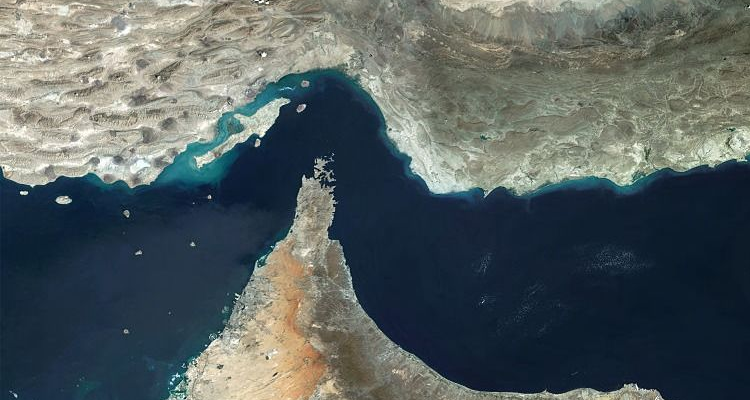
The Strait of Hormuz handles nearly a fifth of the world’s oil supply, making any disruption a matter of global economic concern. The latest incidents underscore how quickly tensions between Tehran and Washington can ripple through international trade—placing countries like India, heavily reliant on Gulf shipping routes, directly in the line of impact.
As diplomatic efforts hang in the balance, the waters of the Gulf remain anything but calm.