
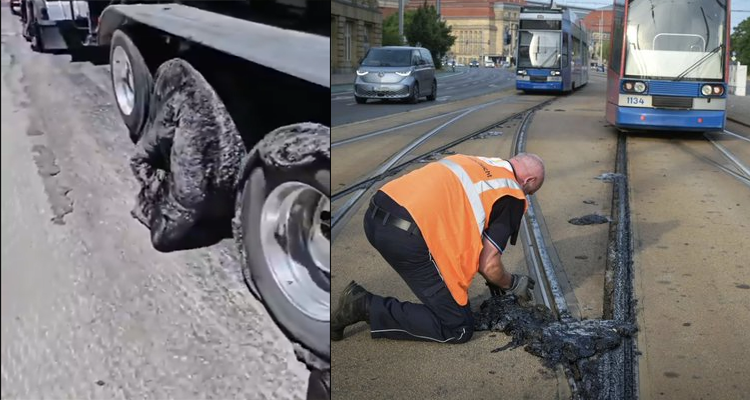
JNS: Scorching temperatures sweeping across Europe have triggered a deadly humanitarian and infrastructure crisis, with more than 1,300 heat-related deaths reported in recent days. The unprecedented heatwave has melted roads, warped railway tracks, disrupted transport services, and forced governments to activate emergency response measures as the World Health Organization (WHO) issued a stark warning over the growing threat of extreme heat.
Large parts of France, Germany, Spain, Italy, Portugal, Poland, the Czech Republic and several other European nations have witnessed temperatures soaring above 40°C, breaking long-standing records. Authorities have urged people to stay indoors, avoid outdoor activities during peak hours and take extra precautions, particularly for the elderly, children and those with underlying health conditions.
🚨 Europe is in the grip of a historic heatwave
– WHO links 1,300+ excess deaths to the extreme heat since 21 June
– Germany hit 41.7°C, Poland 40.5°C, and the Czech Republic 41.1°C
– France alone has reported around 1,000 excess deaths#Europe #heatwave #Germany pic.twitter.com/V1mBrC824Q
— GlobeUpdate (@Globupdate) June 29, 2026
Heat Brings Europe to a Standstill
The relentless heat has severely affected public infrastructure across the continent. Roads have softened and developed cracks under the intense sun, while tram lines and railway tracks have buckled, forcing train operators to reduce speeds or suspend services in several regions.
Power grids have also come under immense pressure due to soaring demand for air conditioning, while hospitals are witnessing a sharp increase in patients suffering from dehydration, heat exhaustion and heatstroke. Several schools have either shortened classroom hours or temporarily suspended classes, and outdoor events have been cancelled as authorities struggle to cope with the extreme conditions.
1,300 KILLED across Europe in 7 DAYS as HEATWAVE grips continent — WHO pic.twitter.com/Nky2aCYpxl
— RT (@RT_com) June 28, 2026
WHO Sounds the Alarm
The WHO has described the situation as a serious public health emergency, warning that Europe is warming faster than any other continent. The agency estimates that more than 1,300 excess deaths have been linked to the ongoing heatwave since late June.
Health experts caution that extreme heat is often called the “silent killer” because many deaths occur indirectly through worsening heart disease, respiratory illnesses and other existing medical conditions. They have urged governments to strengthen early warning systems, improve urban planning and expand access to cooling centres to protect vulnerable populations.
Climate Change Intensifying Heatwaves
Climate scientists say the current crisis bears the unmistakable fingerprints of climate change. A persistent high-pressure system, often referred to as an “Omega Block,” has trapped hot air over much of Europe, preventing cooler weather from moving in.
Researchers warn that rising global temperatures are making heatwaves more frequent, longer-lasting and more intense. Many European cities and transport networks, originally built for milder climates, are increasingly struggling to withstand prolonged periods of extreme heat.
Governments Step Up Emergency Measures
Several European governments have activated national heat emergency plans, opened public cooling shelters, increased medical preparedness and issued safety advisories urging residents to remain hydrated and check regularly on elderly neighbours and relatives.
Experts say the latest heatwave is not just a weather event but a warning that climate adaptation must become a priority. Investments in greener cities, heat-resistant infrastructure and stronger public health systems will be crucial as extreme weather events become more common.
The ongoing crisis has once again underscored the devastating human and economic cost of rising global temperatures, with Europe facing one of its toughest climate challenges in recent years.