
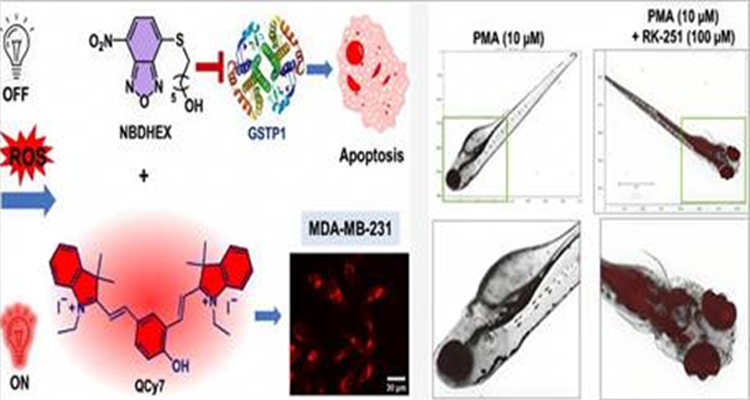
New Delhi: A new experimental cancer drug developed by researchers in India is drawing attention for its ability to selectively activate inside cancer cells while potentially sparing healthy cells. Named RK-251, the experimental compound has been designed as a “smart” prodrug that responds to a chemical environment found at higher levels in many cancer cells.
The research, involving scientists from the Indian Institute of Technology Guwahati (IIT Guwahati) and the Institute of Advanced Study in Science and Technology (IASST), was published in the Journal of Medicinal Chemistry of the American Chemical Society in July 2026.
How Does RK-251 Work?
Unlike conventional chemotherapy, which can affect both cancerous and healthy rapidly dividing cells, RK-251 has been designed to remain relatively inactive until it encounters high levels of reactive oxygen species (ROS).
Cancer cells often have elevated ROS levels because of their altered metabolism and rapid growth. According to India’s Department of Science & Technology, this difference provides RK-251 with a potential biological “switch”.
Once RK-251 enters a cancer cell, the elevated ROS environment activates the compound and releases NBDHEX, an anticancer agent that inhibits glutathione-S-transferase pi (GSTP1), a protein associated with cancer-cell survival and resistance to certain anticancer drugs.
➜ A new “smart” cancer drug designed to switch on and work only inside cancer cells can replace traditional chemotherapy, which in many cases also harms healthy cells.
➜ Cancer treatment often damages healthy cells along with cancer cells, causing significant associated… pic.twitter.com/LO4R4B0oYU
— PIB India (@PIB_India) August 19, 2026
Why Is It Being Called a “Smart” Drug?
The key idea behind RK-251 is selective activation.
The drug incorporates a ROS-responsive component and a near-infrared fluorescent molecule called QCy7. When ROS triggers the drug, NBDHEX is released and the fluorescent component produces a detectable signal.
This dual function could potentially allow the compound not only to deliver an anticancer agent more selectively but also to provide an indication of where activation is taking place. The researchers describe this as a fluorogenic prodrug approach.
Promising Results Against Aggressive Breast Cancer
In laboratory experiments, RK-251 showed significant anticancer activity against triple-negative breast cancer (TNBC) cells, specifically the MDA-MB-231 cell line.
The researchers reported stronger activity against the cancer cells than against non-malignant cells, along with changes in important cancer-related marker genes. This is particularly noteworthy because triple-negative breast cancer is an aggressive form of the disease for which treatment options remain challenging.
The compound was also tested in developing zebrafish embryos. The study reported activation-related fluorescence without noticeable abnormalities or acute toxicity under the experimental conditions used.
Could RK-251 Replace Chemotherapy?
Not yet. This is an important distinction.
Although some reports have described RK-251 as a potential replacement for chemotherapy, the available scientific evidence shows that it is currently an experimental, preclinical drug candidate, not an approved replacement for chemotherapy.
The published study reports laboratory cell experiments and zebrafish testing. It does not establish that RK-251 is safe or effective in cancer patients, nor does it demonstrate that the drug can replace standard chemotherapy in humans. Human clinical trials will be necessary before such a conclusion can be made.
Why the Research Matters
One of the major challenges of conventional cancer treatment is achieving a balance between destroying cancer cells and limiting damage to healthy tissues. A drug that becomes active predominantly within tumour cells could potentially reduce unwanted effects, although this remains to be demonstrated clinically.
RK-251 represents a broader trend in cancer research toward activatable prodrugs—medicines designed to be switched on by specific conditions within tumours rather than remaining fully active throughout the body.
The researchers’ approach is particularly interesting because it combines targeted drug activation with fluorescence-based detection, potentially opening a route toward more selective cancer treatment and imaging.
What Happens Next?
The biggest hurdle is moving RK-251 from laboratory research into human studies. Researchers will need to establish its pharmacokinetics, appropriate dosage, long-term toxicity, effectiveness in animal cancer models and, eventually, its safety and efficacy through properly designed clinical trials.
If those stages are successful, RK-251 could eventually contribute to a new generation of cancer therapies designed to activate preferentially inside tumour cells rather than indiscriminately attacking rapidly dividing cells.
For now, however, RK-251 should be viewed as a promising preclinical cancer-drug candidate—not yet a clinically proven replacement for chemotherapy.
Key Facts
- Drug candidate: RK-251
- Approach: ROS-activated “smart” prodrug
- Active anticancer compound released: NBDHEX
- Primary target: GSTP1
- Cancer model showing promising activity: Triple-negative breast cancer cells
- Additional testing: Developing zebrafish embryos
- Research status: Preclinical
- Human clinical use: Not established
- Potential significance: More selective activation of anticancer treatment inside tumour cells