Ranchi: The Jharkhand Health Department has stepped up surveillance following a rise in seasonal influenza cases, including Influenza A (H1N1) and H3N2, reported in several states such as Delhi, Karnataka, Kerala, Maharashtra and Rajasthan.
Acting on directions from the Union Health Ministry, National Health Mission Jharkhand Mission Director Shashi Prakash Jha has asked Civil Surgeons, medical colleges and District Surveillance Officers to remain vigilant and maintain continuous monitoring of suspected cases.
Under the Integrated Disease Surveillance Programme (IDSP), the state is conducting daily surveillance of Influenza-Like Illness (ILI) and Severe Acute Respiratory Infection (SARI) cases, with regular reporting through the IHIP portal under the supervision of State Surveillance Officer Dr Pradeep Kumar Singh.
राँची में बढ़ रहा स्वाइन फ्लू, सीजनल फ्लू पर झारखंड में अलर्ट, देखिए दोपहर 01:30 बजे की बड़ी खबरें।#News18BiharJharkhand pic.twitter.com/yRFjKbZ4ZI
— News18 Jharkhand (@News18Jharkhand) August 29, 2026
The department said no influenza infection has so far been confirmed in Jharkhand, but stressed that timely precautions and public awareness can help prevent the spread.
Hospitals Asked to Strengthen Preparedness
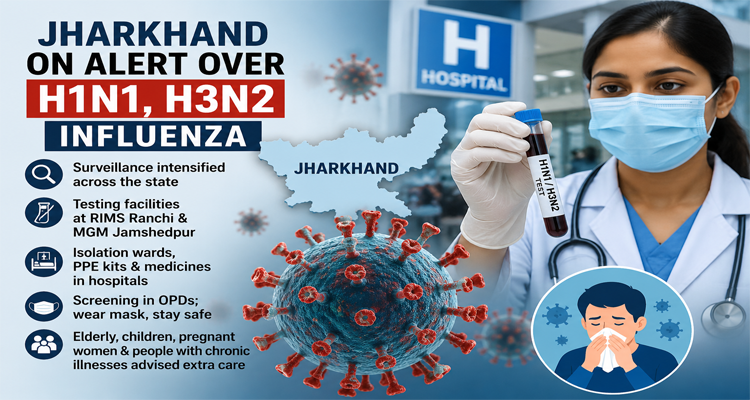
Testing facilities for H1N1 and H3N2 have been made available at RIMS, Ranchi, and MGM, Jamshedpur. District hospitals and medical colleges have also been directed to earmark isolation wards with at least 10 beds for suspected and confirmed cases.
Hospitals have been instructed to maintain adequate supplies of PPE kits, N95 and triple-layer masks, VTM kits, essential medicines, oxygen equipment and ventilators.
Mandatory screening will be carried out in hospital OPDs for patients showing symptoms such as fever, cough and cold, as well as those presenting with severe respiratory infections. Doctors and healthcare workers have been directed to wear masks during the screening process.
Awareness Campaign Intensified
State Nodal Officer (IEC) Dr Rahul Kishore Singh said awareness activities are being conducted through information materials highlighting influenza symptoms, prevention measures and essential dos and don’ts.
The Health Department has advised elderly people, children below five years, pregnant women and those with serious chronic illnesses to exercise extra caution, as they are considered more vulnerable to complications from influenza.