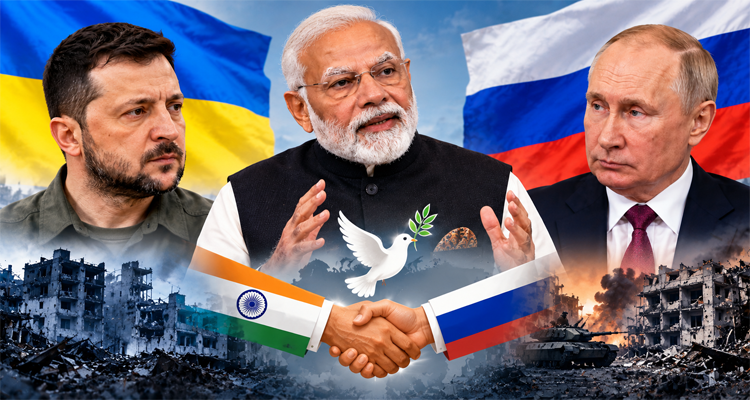
New Delhi: India has stepped up its diplomatic efforts to end the Russia-Ukraine war by proposing a three-part truce framework focused on energy security, Black Sea trade and protection of commercial shipping. The proposal has received positive responses from both Moscow and Kyiv, strengthening India’s emerging role in efforts to reduce hostilities.
India’s proposal seeks to establish limited ceasefire arrangements that could reduce fighting while creating conditions for broader peace negotiations. The plan was conveyed to Ukraine during External Affairs Minister S Jaishankar’s visit to Kyiv last month.
What is India’s three-part plan?
The proposed truce broadly calls for:
- An end to attacks on energy facilities and other critical infrastructure by both sides.
- Keeping Black Sea ports open to ensure the uninterrupted movement of grain and energy supplies.
- Stopping attacks on commercial vessels travelling through the Black Sea, thereby protecting maritime trade and essential commodity shipments.
The initiative is significant because it goes beyond a conventional battlefield ceasefire and seeks to address the wider humanitarian, economic and global food-security consequences of the conflict.
India comments on reports in Indian media about three-point proposed Ukraine peace plan
It covers Black Sea shipping, grain and fuel exports, and a possible mutual halt to attacks, according to MEA spokesperson Randhir Jaiswal.
https://t.co/WFhFRULAnp
— Sputnik India (@Sputnik_India) October 7, 2026
Kyiv praises India’s proposal
Ukrainian Foreign Minister Andrii Sybiha has described India’s initiative as the “broadest” among recent ceasefire proposals received by Kyiv.
Sybiha has indicated that Ukraine is willing to consider different truce formats, including limited ceasefires covering energy facilities and the Black Sea. However, Kyiv has stressed that any meaningful arrangement must also address attacks on energy and port infrastructure as well as security in the Black Sea.
The Ukrainian response marks an important opening for India’s proposal, particularly as the initiative seeks practical measures that could be implemented even before a comprehensive peace agreement is reached.
Moscow welcomes India’s initiative
Russia has also responded positively to India’s proposal. Kremlin spokesman Dmitry Peskov said Moscow was “grateful to our Indian friends” for their readiness to contribute to resolving the conflict and for the ideas being put forward.
The Russian response is significant as it indicates that New Delhi’s initiative has found an opening on both sides of the conflict. India has maintained communication with Moscow and Kyiv while avoiding alignment with either side.
India moves beyond diplomatic advocacy
The proposal comes as New Delhi appears to be taking a more active role in efforts to end the conflict. Jaishankar has said India has moved “beyond advocacy” and is engaging with both Moscow and Kyiv on practical measures involving Black Sea shipping, grain and energy exports and possibilities for reducing attacks.
Russian President Vladimir Putin has also praised Prime Minister Narendra Modi’s efforts, saying Modi repeatedly raises the issue of ending the conflict and has “excellent ideas” aimed at finding mutually acceptable solutions.
India has consistently maintained that the Russia-Ukraine conflict must ultimately be resolved through dialogue and diplomacy rather than on the battlefield.
The latest developments could mark a significant expansion of India’s role from advocating peace to facilitating specific and practical ceasefire measures. The positive responses from both Moscow and Kyiv provide some diplomatic momentum, but translating the proposal into an actual ceasefire will remain a major challenge.
The biggest test now is whether Russia and Ukraine can turn their positive responses into concrete agreements and use the proposed limited truces as a pathway toward a broader cessation of hostilities and eventually a lasting peace settlement.