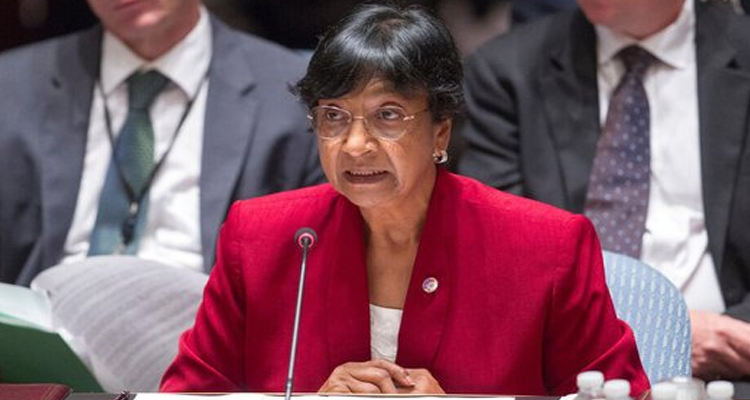
Oslo: South African jurist of Indian Tamil origin Navanethem “Navi” Pillay has been awarded the 2026 Nobel Peace Prize in recognition of her longstanding contribution to human rights, international law and accountability for serious crimes.
The award, announced on Friday, October 9, highlights Pillay’s efforts to strengthen international justice and uphold the principles of human dignity, equality and the rule of law at a time when global conflicts and political tensions continue to challenge international institutions.
From Apartheid-Era Struggles to International Justice
Born in Durban, South Africa, in 1941, Pillay belongs to a family of Indian Tamil descent. She grew up during apartheid, when racial discrimination and segregation severely restricted the rights and opportunities of non-white South Africans.
Determined to challenge injustice, she pursued a career in law and established her own law firm in 1967. She defended activists opposing apartheid and subsequently emerged as an influential figure in international human rights and criminal justice.
⚡️2026 NOBEL PEACE PRIZE goes to Israel critic Navanethem ‘Navi’ Pillay
Former UN human rights chief recognized for promoting peace & intl law
She led a UN commission whose report last year concluded Israel had committed genocide in Gaza, which Israel dismissed as ‘scandalous’ https://t.co/lmdP8cY3XZ
— RT (@RT_com) October 9, 2026
Her professional journey took her to several prominent judicial and international institutions, where she worked to strengthen legal protections for victims of discrimination, violence and human rights abuses.
Key Milestones in Navi Pillay’s Career
Pillay’s career includes several landmark appointments. In 1995, she became the first non-white woman to serve on South Africa’s High Court. She later joined the International Criminal Tribunal for Rwanda, eventually serving as its president.
She also served as a judge of the International Criminal Court and held the position of United Nations High Commissioner for Human Rights from 2008 to 2014. Her work involved advancing international human rights standards and promoting accountability for serious violations.
Pillay subsequently participated in international legal proceedings and inquiries concerning allegations of grave human rights abuses, further cementing her reputation as a prominent advocate of international justice.
Landmark Contribution to Human Rights
One of Pillay’s most significant contributions came through her work at the Rwanda tribunal. The tribunal established important legal precedents recognising that rape and sexual violence could constitute crimes against humanity and, under specific circumstances, acts of genocide.
These developments strengthened international criminal law and brought greater attention to the experiences of victims of sexual violence during armed conflicts.
As UN High Commissioner for Human Rights, Pillay worked to promote universal human rights protections, defend vulnerable communities and encourage governments to meet their international obligations.
Her involvement in sensitive international legal issues, including matters concerning Myanmar and the occupied Palestinian territory, has also placed her work at the centre of global debates over accountability and the enforcement of international law.
A Strong Message on Peace and the Rule of Law
Pillay’s recognition draws attention to the relationship between justice and lasting peace. International legal institutions are designed to investigate serious crimes, establish responsibility and provide avenues for justice when fundamental rights are violated.
Her career reflects the principle that peace cannot be secured through political agreements alone; it also requires respect for human rights, accountability and the consistent application of international law.
The award comes amid continuing concerns about armed conflicts, civilian suffering and challenges confronting international institutions. It underscores the importance of ensuring that alleged perpetrators of serious international crimes are subject to fair and credible legal processes.
Recognition for the Indian Diaspora
Pillay’s achievement is also significant for people of Indian origin around the world. Although born and raised in South Africa, her Indian Tamil heritage connects her story to the wider Indian diaspora.
Her journey from confronting racial discrimination under apartheid to serving in leading international judicial and human rights institutions represents a career dedicated to challenging injustice and strengthening legal protections for vulnerable people.
The Nobel Peace Prize recognises her contribution to international justice while drawing renewed attention to the role of human rights, equality and the rule of law in building a more peaceful world.