
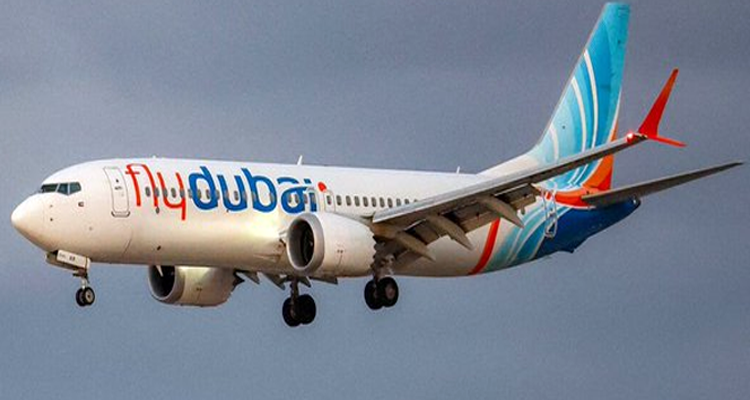
New Delhi: A publication linked to Al Qaeda supporters has reportedly praised the recent incident aboard a Flydubai flight and called for similar attacks targeting aircraft carrying Americans and Israelis, according to reports.
The reported development has added a new dimension to the investigation into the September 30 incident involving Flydubai Flight FZ1073, which was travelling from Dubai to Tel Aviv.
Al Qaeda-linked propaganda praises incident
According to reports, the latest edition of an Arabic-language publication associated with Al Qaeda supporters referred to the Flydubai incident while invoking the September 11, 2001 attacks in the United States.
FLYDUBAI CO-PILOT’S LINKEDIN VIDEO SHOWED EL AL PLANES, ENDED WITH AL-ZAWAHIRI: CNN
CNN reports that a video linked to Flydubai co-pilot Hamam al-Hammami showed Israeli airline’s El Al aircraft at Dubai airport before ending with an image of former Al-Qaeda leader Ayman…
— Subodh Kumar (@kumarsubodh_) October 3, 2026
The publication reportedly called on extremists to replicate attacks against aircraft carrying Americans, Israelis and others whom the group considers its enemies. The material was circulated through online channels associated with Al Qaeda supporters.
Security analysts have warned that such propaganda can be used by extremist organisations to glorify acts of violence, encourage lone actors and exploit high-profile incidents for recruitment and radicalisation.
Al Qaeda calls for copycats to target US citizens on planes while praising Dubai flight hijacker: America will end’ https://t.co/esYpfqI9Xq pic.twitter.com/dOMAXTUeQv
— New York Post (@nypost) October 3, 2026
What happened on Flydubai flight?
The incident occurred on September 30 aboard Flydubai Flight FZ1073 during its journey from Dubai to Tel Aviv.
According to reports, the aircraft’s Indian captain, Smit Machchhar, was allegedly attacked inside the cockpit by the co-pilot, Hamam al-Hammami, an Omani national. The incident reportedly involved an attempt to take control of the aircraft.
The flight was subsequently diverted to Tabuk in Saudi Arabia, where it landed safely. Passengers and crew members were reported safe, while Captain Machchhar received medical attention following the incident.
Authorities have been investigating the circumstances surrounding the attack, including the co-pilot’s background and possible extremist connections.
Questions over extremist links
Investigators are also examining material reportedly associated with al-Hammami’s social-media activity and his alleged interest in Al Qaeda figures and extremist ideology.
However, the reported material does not by itself establish that he was an operational member of Al Qaeda. Investigators are expected to determine whether there was any direct organisational connection or whether the incident was carried out independently.
The distinction is significant because extremist groups frequently claim or praise attacks after the event without necessarily having planned or directed them.
Aviation security concerns grow
The Al Qaeda-linked praise has heightened concerns over the possibility of extremist groups using the Flydubai incident as propaganda.
The episode has also raised questions about pilot screening, cockpit security, intelligence sharing and the monitoring of individuals with suspected extremist affiliations.
For aviation authorities, the immediate challenge is to establish exactly what led to the cockpit confrontation, how the alleged attacker was cleared to operate as a co-pilot and whether any warning signs were missed before the flight.
The reported Al Qaeda reaction is therefore being viewed as a significant propaganda development, but it should not by itself be interpreted as evidence that a new attack is imminent. The investigation into the Flydubai incident and the alleged extremist links of the co-pilot remains ongoing.