
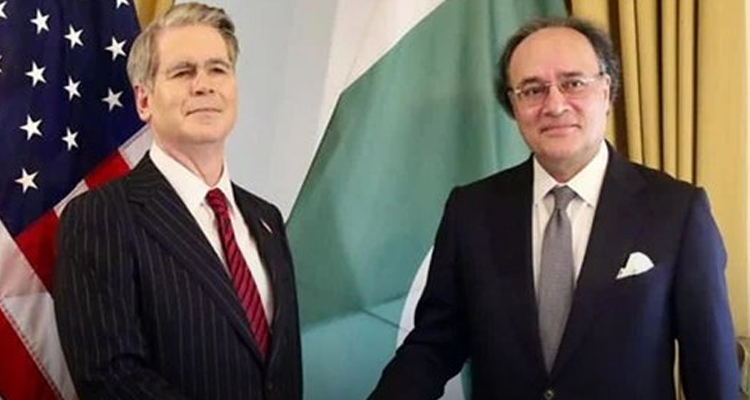
Washington/Islamabad: Pakistan has sought a $10 billion currency stabilisation package from the United States, hoping its recent diplomatic role in facilitating talks during the Iran conflict will translate into stronger economic cooperation with Washington. If approved, the proposed financial backstop could provide a crucial lifeline to Pakistan’s cash-strapped economy by boosting foreign exchange reserves and easing pressure on the Pakistani rupee.
According to the media report, the request was made by Pakistan’s Finance Minister Muhammad Aurangzeb during meetings with US Treasury Secretary Scott Bessent in Washington. Islamabad is seeking a Bilateral Exchange Stabilisation Support Facility worth $10 billion with a maturity of up to five years. The proposed facility would help strengthen Pakistan’s external finances while reducing its dependence on emergency multilateral lending, including IMF support.
Diplomatic Role Opens New Economic Opportunity
The request comes in the wake of Pakistan’s involvement in brokering talks related to the Iran war, a role that significantly raised Islamabad’s diplomatic profile in Washington. Pakistani officials believe the mediation effort has created an opportunity to deepen strategic and economic ties with the United States and secure tangible economic benefits.
According to Reuters, Islamabad hopes the proposed facility will serve not only as a financial cushion but also as a strong political endorsement from the United States, signalling confidence in Pakistan’s ongoing economic reforms.
A Bid to Protect the Rupee and Build Reserves
Pakistan’s foreign exchange reserves remain under pressure despite gradual economic stabilisation under the International Monetary Fund’s reform programme. The proposed US facility would strengthen reserves, stabilise the rupee, improve sovereign creditworthiness and provide greater resilience against external financial shocks.
Officials say the arrangement is intended to complement—not replace—the IMF programme by providing additional liquidity during periods of market stress. Pakistan has implemented tighter fiscal and monetary policies under IMF conditions, but its economy continues to face challenges from heavy external debt obligations, high financing needs and regional geopolitical risks.
US Yet to Respond
The US Treasury has not commented publicly on Pakistan’s request. However, Pakistani embassy officials in Washington confirmed that Finance Minister Aurangzeb sought American support to improve Pakistan’s access to international capital markets, strengthen foreign exchange reserves and enhance the country’s sovereign credit ratings.
Beyond financial assistance, Pakistan is also seeking greater US investment in sectors such as mining, real estate, digital assets and technology as part of broader efforts to reset bilateral economic relations. Analysts say approval of the proposed facility would mark one of the most significant US financial commitments to Pakistan in recent years and could strengthen economic cooperation between the two countries.