Amid rising concerns over a potential fuel crisis triggered by escalating geopolitical tensions in West Asia, Russia has signalled its readiness to supply liquefied natural gas (LNG) to India, offering a possible cushion against disruptions in global energy supply.
The assurance from Moscow comes at a time when uncertainty surrounding energy shipments from the Middle East has begun to raise alarms in several importing countries. With the possibility of shipping disruptions in key maritime routes such as the Strait of Hormuz, global markets are witnessing volatility in oil and gas supplies, prompting major energy-dependent nations to explore alternative sources.
India, which imports a large portion of its crude oil and natural gas requirements, has been closely monitoring the evolving situation. Any prolonged instability in the Gulf region could directly impact the country’s energy security, particularly the availability of LNG used for power generation, fertiliser production, and industrial operations.
Russia Steps Forward as Alternative Supplier
In this backdrop, Russia has conveyed that it is prepared to step in and support India’s energy requirements if the ongoing tensions disrupt supplies from traditional sources. Russian energy producers have indicated that LNG shipments can be redirected to Asian markets, including India, to ensure continuity of supply.
Over the past few years, Russia has steadily emerged as one of India’s key energy partners. Following geopolitical shifts in Europe, Russian energy exporters have increasingly focused on expanding their presence in Asian markets. India, with its growing energy demand and expanding gas infrastructure, has become an important destination.
The proposed LNG supply could also revive earlier discussions between Russian energy companies and Indian importers regarding long-term gas contracts. Such agreements, which had faced delays earlier due to geopolitical uncertainties and logistical challenges, may now gain renewed momentum in the current global energy scenario.
India Strengthening Energy Security
At the same time, the Indian government has been working to diversify its sources of fuel imports to reduce dependency on any single region. Officials have been exploring additional LNG procurement from various international suppliers to safeguard domestic consumption against potential shortages.
Authorities have also urged industries and consumers to adopt prudent energy usage practices as a precautionary measure while the government continues to secure alternative supply arrangements.
India’s demand for natural gas has been steadily increasing as the country pushes toward cleaner energy sources. The government aims to significantly increase the share of natural gas in the country’s energy mix in the coming years, making stable LNG supplies crucial for sustaining economic growth.
Strategic Energy Partnership
For Russia, expanding LNG exports to India represents an opportunity to deepen economic ties with one of the world’s fastest-growing energy markets. With traditional European markets shrinking due to geopolitical tensions and sanctions, Moscow has been actively strengthening energy cooperation with Asian economies.
For India, increased energy engagement with Russia could provide a reliable buffer against sudden disruptions in global supply chains while helping stabilize domestic fuel prices and availability.
As the global energy landscape continues to evolve amid political and economic uncertainties, enhanced cooperation between India and Russia in the gas sector could play a vital role in ensuring long-term energy security for both countries.
What is LNG, and How is it Different from PNG and LPG?
Liquefied Natural Gas (LNG)
Energy discussions often mention LNG, PNG, and LPG, but many people confuse these three fuels. While all are used for cooking, heating, and industrial energy needs, they differ significantly in composition, storage, transportation, and usage.
LNG (Liquefied Natural Gas) is natural gas that has been cooled to about –162°C, turning it into a liquid. This process reduces its volume by nearly 600 times, making it easier to transport in large quantities.
Key Features
-
Mainly composed of methane (CH₄)
-
Stored and transported in cryogenic tanks
-
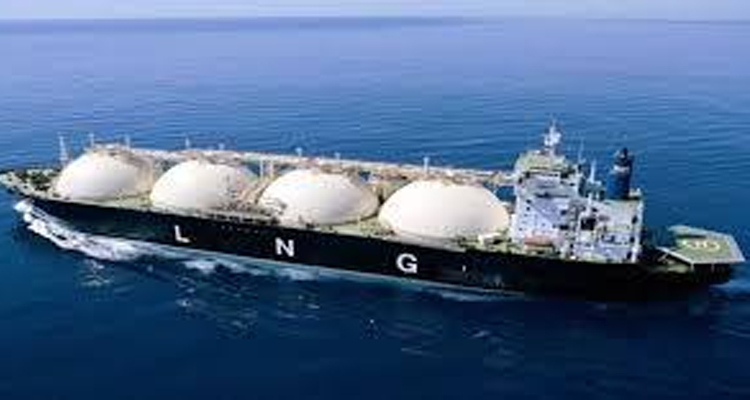
Transported internationally through special LNG ships and terminals
-
Used for power plants, large industries, and city gas networks
Why LNG is Important
Countries that do not have pipeline access to natural gas import LNG by ships. Once it reaches the destination, it is converted back into gas and distributed through pipelines.
Piped Natural Gas (PNG)
PNG (Piped Natural Gas) is natural gas supplied directly to homes and industries through underground pipelines.
Key Features
-
Mostly methane, same base gas as LNG
-
Delivered through pipeline networks
-
Commonly used in homes for cooking and heating
-
Also used in industries and CNG stations
Advantages
-
Continuous supply (no cylinder replacement)
-
Considered safer and cleaner
-
Meter-based billing similar to electricity
In many Indian cities, PNG is replacing LPG cylinders for domestic cooking.
Liquefied Petroleum Gas (LPG)
LPG (Liquefied Petroleum Gas) is a mixture of propane and butane gases that becomes liquid under moderate pressure.
Key Features
-
Stored in pressurized cylinders or tanks
-
Widely used for household cooking
-
Portable and easily distributed without pipelines
-
Also used in hotels, restaurants, and small industries
LPG is the most common cooking fuel in rural and semi-urban India.
Key Differences: LNG vs PNG vs LPG
| Feature | LNG | PNG | LPG |
|---|---|---|---|
| Full Form | Liquefied Natural Gas | Piped Natural Gas | Liquefied Petroleum Gas |
| Main Gas | Methane | Methane | Propane + Butane |
| Form | Liquid (very cold) | Gas | Liquid under pressure |
| Transport | Special ships & cryogenic tanks | Pipelines | Cylinders or tanks |
| Main Use | Power plants, industries, city gas networks | Household and industrial piped supply | Household cooking cylinders |
| Temperature/Pressure | Stored at –162°C | Normal gas pressure | Stored under pressure |
In simple terms:
LNG → Natural gas cooled into liquid for long-distance transport.
PNG → Natural gas delivered to homes via pipelines.
LPG → Gas stored in cylinders used mainly for cooking.