
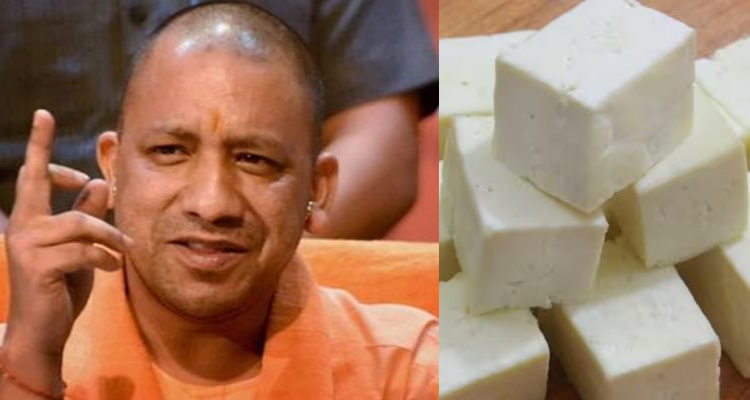
Lucknow: The Uttar Pradesh government has imposed a statewide ban on the manufacture, storage and sale of analogue dairy products, including analogue paneer, cream, ghee, chhena and khoya.
The decision by the Yogi Adityanath government comes amid concerns over dairy products being made with non-milk ingredients and sold in ways that could mislead consumers. Reports of food-safety inspections and laboratory testing have also highlighted concerns over adulteration and the substitution of milk components with other fats and ingredients.
But what exactly is analogue paneer? Is it the same as adulterated paneer? And why has the government taken such a strong step? Here is what consumers need to know.
What is analogue dairy?
According to the Food Safety and Standards Authority of India (FSSAI), an “analogue” in the dairy context is a product in which constituents not derived from milk replace some or all of the milk components. In other words, it is designed to resemble a milk or dairy product while using non-milk ingredients for some of its components.
This distinction is important: an analogue product is not automatically the same thing as a chemically adulterated or poisonous product.
The regulatory concern arises when such a product is represented or sold as a conventional dairy product, such as paneer, without making its true nature clear to consumers.
UP Dairy Ban News: पनीर, घी, छेना और खोया की बिक्री पर रोक? जानें एनालॉग प्रोडक्ट्स का सच!#UPNews #DairyProductsBan #AnalogueDairy #FoodSafety #UPGovernment #YogiAdityanath #FakePaneer #DairyBan pic.twitter.com/tZ010oCZhq
— News18 Uttar Pradesh (@News18UP) August 15, 2026
What is analogue paneer?
Analogue paneer is a paneer-like product in which some or all of the milk-derived components are replaced by ingredients that do not come from milk.
For example, non-milk fats or other ingredients can be used to reproduce some of the texture, appearance and cooking characteristics associated with paneer.
Genuine paneer, by contrast, is a milk product. FSSAI’s standards define chhana or paneer as a product obtained from cow or buffalo milk, or a combination of the two, through precipitation using sour milk, lactic acid or citric acid.
Therefore, a product made substantially from non-milk ingredients cannot simply be presented to consumers as ordinary milk-based paneer.
Is analogue paneer the same as “fake paneer”?
Not necessarily.
The term “fake paneer” is commonly used in everyday reporting, but technically the two terms should not automatically be treated as identical.
An analogue product is specifically a product where non-milk constituents replace milk components. It may be manufactured deliberately as a substitute product.
The problem occurs when such a product is sold or described as paneer without appropriate identification, because consumers may reasonably believe they are buying a conventional milk product. FSSAI’s April 2026 public notice specifically said that selling cheese analogue as paneer is a violation of the food law and warrants strict action.
What is analogue ghee?
Analogue ghee refers to a product designed to resemble ghee but containing non-milk-derived ingredients in place of milk fat.
Traditional ghee is produced from milk or milk-derived fat. An analogue product may instead use other fats to reproduce characteristics associated with ghee.
The Uttar Pradesh government’s latest action places analogue ghee within the products covered by the ban.
What is analogue khoya?
Khoya (mawa) is a concentrated milk product widely used in Indian sweets.
Analogue khoya is a substitute designed to imitate khoya while using non-milk ingredients, including other fats or ingredients that can provide a similar texture.
The inclusion of analogue khoya in the Uttar Pradesh ban is particularly significant because khoya is extensively used by sweet shops and confectionery businesses across the state.
What is analogue cream?
Analogue cream is a cream-like product in which milk-derived components are partially or completely replaced by non-milk constituents.
It can be designed to provide properties such as richness, texture and whipping or cooking performance similar to conventional cream.
What is analogue chhena?
Chhena is a traditional milk product closely related to paneer and is widely used in Indian sweets.
An analogue chhena attempts to reproduce the characteristics of chhena using non-milk components. The Uttar Pradesh order also includes analogue chhena among the products prohibited under the latest action.
Why has Uttar Pradesh banned these products?
The government’s move follows food-safety concerns and inspections involving milk and dairy products across the state.
According to reports, food-safety teams collected samples during inspections and laboratory testing raised concerns about products containing vegetable oils, other fats, soybean or soybean-derived ingredients and other non-milk substances.
The government’s stated approach is that milk and milk products should be manufactured and sold according to their essential and legally prescribed nature, rather than allowing substitutes to be marketed to consumers as conventional dairy products.
What exactly has Yogi government banned?
The statewide restriction covers the manufacture, storage and sale of analogue dairy products, with reports identifying the following products:
- Analogue paneer
- Analogue cream
- Analogue ghee
- Analogue chhena
- Analogue khoya
- Other analogue dairy products covered by the order
The action is aimed at preventing such products from entering the market or being sold in a manner that can mislead consumers.
FSSAI has already warned against selling analogue as paneer
The Uttar Pradesh action comes after a broader regulatory push by FSSAI.
In an April 2026 public notice, FSSAI’s Western Region directed centrally licensed cheese-analogue manufacturers and food-service establishments to ensure that cheese analogue is not sold or represented as paneer.
The notice specifically stated that any cheese analogue sold by a manufacturer to a food-service establishment as paneer would constitute a serious violation of the law. It also directed food-service establishments using cheese analogue to identify it appropriately rather than presenting dishes made with it as paneer-based dishes.
Why is the issue important for consumers?
The central issue is transparency.
A consumer buying paneer generally expects a milk-based product. If a product contains substantial non-milk ingredients, consumers should be able to know what they are actually purchasing.
This becomes particularly important for:
- Households buying loose paneer
- Restaurants and hotels
- Sweet shops
- Caterers
- Food manufacturers
- Consumers with specific dietary requirements
The regulatory action is therefore not simply about whether a substitute product exists; it is about what the product contains and what consumers are told they are buying.
Does analogue mean poisonous?
No.
This is an important distinction for accurate reporting.
The word “analogue” itself does not mean that a product is poisonous or necessarily unsafe. FSSAI’s definition simply refers to dairy-like products in which non-milk constituents replace milk components, wholly or partially.
However, a separate question is whether a particular product contains unsafe, undeclared or prohibited substances, or whether it is illegally marketed as another food.
Therefore, it would be inaccurate to label every analogue product “poisonous” without laboratory evidence relating to that specific product.
What should consumers look for?
Consumers purchasing paneer, ghee, khoya or other dairy products should preferably:
- Check the product label and ingredient list.
- Look for the FSSAI licence details on packaged products.
- Be cautious of unusually cheap dairy products.
- Purchase packaged dairy products from reliable sources.
- Report suspected adulteration or misleading labelling to the relevant food-safety authorities.
The bigger picture
Uttar Pradesh is not alone in tightening action against dairy analogues. Madhya Pradesh recently announced a ban on analogue paneer, while FSSAI has also intensified regulatory attention to the way dairy analogues are manufactured, labelled and used in food-service establishments.
The Uttar Pradesh government’s decision therefore represents another major step in India’s continuing effort to ensure that consumers are not sold a substitute product under the name of a conventional dairy product.
Bottom Line
The simplest way to understand the issue is this:
Real paneer = milk-based paneer.
Analogue paneer = paneer-like product in which some or all milk components are replaced by non-milk ingredients.
The key regulatory issue is proper identification and truthful sale. Uttar Pradesh has now gone further by imposing a statewide ban on the manufacture, storage and sale of analogue dairy products including paneer, ghee, khoya, cream and chhena.
For consumers, the message is clear: what is being sold as dairy should match what the label and law say it is.