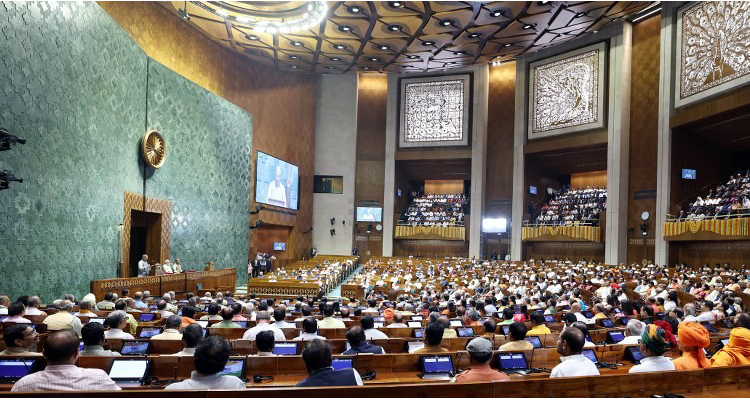
New Delhi: In a major legislative setback, the Centre on Friday failed to push through the Constitution (131st Amendment) Bill, 2026 in the Lok Sabha, as it fell short of the crucial two-thirds majority required for passage. The Women’s Reservation Bill fell short of the two-thirds majority of 352, out of the total 528 members present in the Lok Sabha.
The proposed law, aimed at reserving 33% seats for women in Parliament and state assemblies, secured 298 votes in favour and 230 against—insufficient for a constitutional amendment.
Women’s reservation & delimitation defeated
Women’s reservation constitutional amendment fails Lok Sabha test, govt fails to get two-third Lok Sabha majority@Mohammed11Saleh brings you more details pic.twitter.com/IZy2xLFf4e
— WION (@WIONews) April 17, 2026
Linked Bills Put on Hold
Following the defeat, the government chose not to table two key accompanying proposals for voting—one on delimitation and another on expanding Lok Sabha seats. Officials maintained that both were “intrinsically linked” to the women’s quota framework.
Government Makes Final Push
Importance of the Women’s Reservation Bill
The debate, which stretched late into Thursday night and resumed Friday, saw top leaders making a strong pitch for the bill.
Prime Minister Narendra Modi appealed to MPs to rise above political divides, calling the bill a matter of national importance rather than partisan politics. He also assured that southern states would not be disadvantaged in any future seat expansion.
Backing the proposal, Home Minister Amit Shah said representation of southern states would be safeguarded—and could even marginally improve—if the Lok Sabha’s strength increases from 543 to around 816 seats.
The ruling side accused the Opposition of blocking a “historic reform” aimed at boosting women’s political participation.
Opposition Flags Structural Concerns
Leader of the Opposition Rahul Gandhi led the charge against the bill, particularly objecting to its linkage with delimitation.
Calling it a “disguised political exercise,” Gandhi argued that the proposal was less about women’s empowerment and more about redrawing the country’s electoral map. He also alleged that the move could sidestep demands for a caste census and potentially dilute representation for Other Backward Classes (OBCs).
What Lies Ahead
With the bill failing to clear Parliament, the future of women’s reservation—especially in its current form tied to delimitation—remains uncertain. The outcome has set the stage for a sharper political confrontation over representation, census data, and electoral restructuring in the run-up to future elections.
Opposition Blocked Women’s Quota, Says Amit Shah
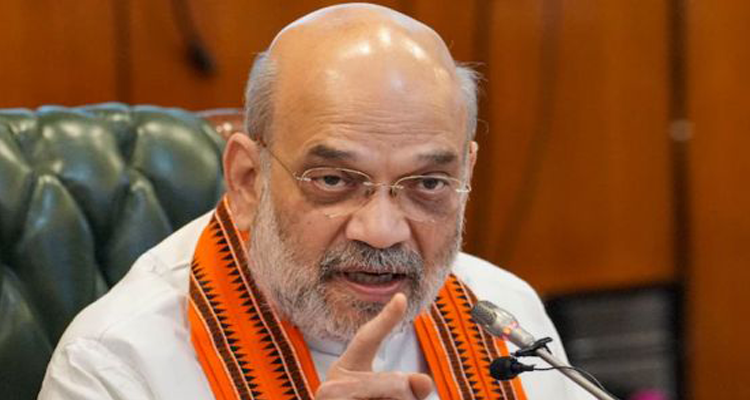
Union Home Minister Amit Shah on Friday blamed Opposition parties for the failure of the Women’s Reservation Bill in the Lok Sabha, saying their stance denied women a 33% quota in Parliament and state assemblies.
In a strongly worded social media post, Shah said parties including Congress, TMC, DMK and the Samajwadi Party did not allow the Constitution Amendment Bill linked to the Nari Shakti Vandan Adhiniyam to pass. He described the Opposition’s reaction to the bill’s defeat as “reprehensible”.
“Because of this, women of the country will not get their rightful 33% reservation,” he said, alleging that the Opposition has repeatedly obstructed such measures and does not act in the interest of women or the nation.
आज लोकसभा में बहुत अजीब दृश्य दिखा।
नारी शक्ति वंदन अधिनियम के लिए जरूरी संविधान संशोधन बिल को कांग्रेस, TMC, DMK और समाजवादी पार्टी ने पारित नहीं होने दिया। महिलाओं को 33% आरक्षण देने के बिल को गिरा देना, उसका उत्साह मनाना और जयनाद करना सचमुच निंदनीय और कल्पना से परे है।
अब…
— Amit Shah (@AmitShah) April 17, 2026
Sharpening his attack, Shah said the issue would resonate politically, warning that the Opposition would face the “wrath of women voters” in future elections, including the 2029 Lok Sabha polls.
The remarks come amid an escalating political confrontation, with the ruling side accusing the Opposition of blocking a key reform, while Opposition leaders argue that the bill’s linkage with delimitation raises concerns over representation and electoral balance.
संशोधन विधेयक गिर गया।
उन्होंने महिलाओं के नाम पर, संविधान को तोड़ने के लिए, असंवैधानिक तरकीब का इस्तेमाल किया।
भारत ने देख लिया।
INDIA ने रोक दिया।जय संविधान।
— Rahul Gandhi (@RahulGandhi) April 17, 2026