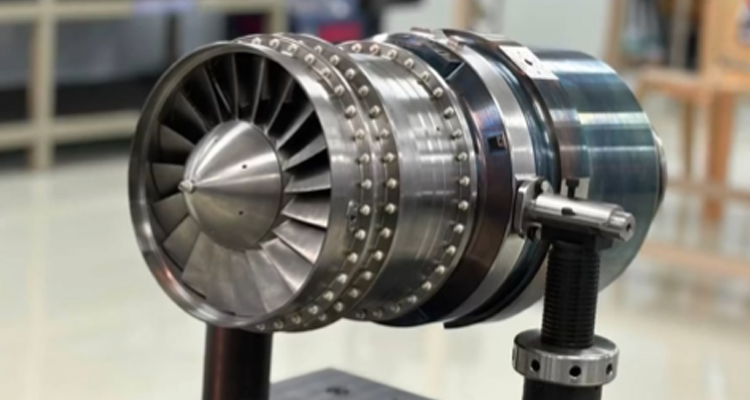
New Delhi: India has achieved a major milestone in indigenous aerospace and defence technology with the successful development of its first expendable turbojet engine in the 350 kg thrust class, marking a significant step towards self-reliance in advanced propulsion systems. Developed by the Gas Turbine Research Establishment (GTRE), a Bengaluru-based laboratory under the Defence Research and Development Organisation (DRDO), the engine has been successfully manufactured and delivered in collaboration with Hyderabad-based Azad Engineering.
The Ministry of Defence announced that the engine was successfully realised and handed over to GTRE on July 22, describing the achievement as a landmark for India’s aerospace and defence manufacturing ecosystem. GTRE had selected Azad Engineering as its industry partner for manufacturing and assembly of the engine.
DRDO’s GTRE has successfully developed India’s first indigenous Expendable Turbo Jet Engine in the 350 kg thrust class. Manufactured and assembled by industry partner Azad Engineering, the engine marks a historic milestone in indigenous jet engine technology and reflects the… pic.twitter.com/osIVeLdA2W
— Ministry of Defence, Government of India (@SpokespersonMoD) July 23, 2026
Designed in the 350 kg thrust class, the expendable turbojet engine is expected to power long-range cruise missiles, loitering munitions, unmanned aerial vehicles (UAVs), and other expendable airborne platforms. Such propulsion technology is possessed by only a handful of countries, making the achievement strategically significant for India’s defence preparedness.
Defence experts say the indigenous engine will substantially reduce India’s dependence on imported propulsion systems while strengthening the country’s capability to develop next-generation unmanned combat platforms and precision-guided weapon systems. The project also reflects the growing partnership between DRDO and Indian private industry under the government’s ‘Aatmanirbhar Bharat’ initiative.
The successful development is expected to accelerate indigenous programmes requiring compact, high-performance propulsion systems and provide a boost to India’s domestic aerospace manufacturing ecosystem. Officials believe the achievement will pave the way for future advances in indigenous gas turbine engine technologies across defence applications.