
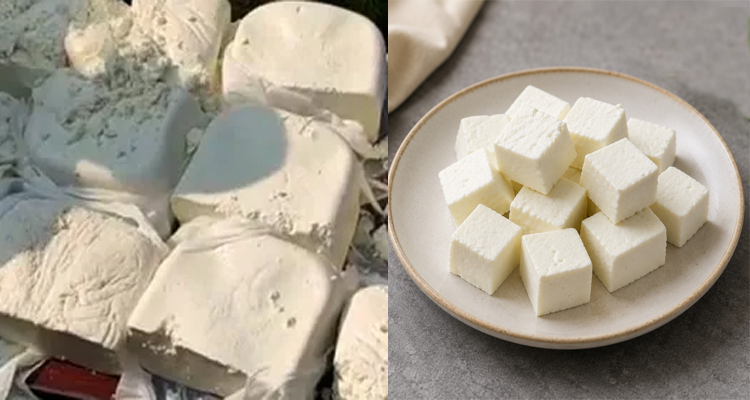
Analogue Paneer vs Traditional Paneer: What’s the Difference?
- by Ashis Sinha
New Delhi: Paneer, one of India’s most widely consumed dairy foods, has come under renewed regulatory scrutiny after the Food Safety and Standards Authority of India (FSSAI) proposed changes aimed at stopping non-dairy analogue products from being sold or marketed as “paneer”.
The move could eventually lead to a nationwide prohibition on the sale of paneer made from constituents not derived from milk, although the proposal is still at the draft stage and public comments have been invited for 60 days.
The development has brought the difference between traditional paneer and analogue paneer into focus.
What is traditional paneer?
Traditional paneer is a milk-based dairy product. Under the FSSAI standard, paneer or chhana is produced from cow or buffalo milk, or a combination of the two, by precipitation using sour milk, lactic acid or citric acid. The existing standard also specifies requirements relating to moisture and milk fat.
In simple terms, conventional paneer is made from milk and milk-derived ingredients, with permitted acidulants, salt and spices or condiments as applicable.
FSSAI’s dairy-product standards do not permit vegetable oils, vegetable fats or vegetable proteins to replace milk constituents in a product sold as paneer.
What is analogue paneer?
Analogue paneer is designed to look, feel and behave like paneer, but its composition can be substantially different.
According to recent reporting on the FSSAI proposal, analogue products may replace milk fat and milk proteins partly or completely with ingredients such as vegetable oils, fats and vegetable proteins. Some formulations can also contain ingredients such as starches and emulsifiers.
This distinction is important because a consumer buying something labelled simply as “paneer” may reasonably expect a dairy product.
Traditional paneer vs analogue paneer
| Feature | Traditional Paneer | Analogue Paneer |
|---|---|---|
| Primary base | Milk | Non-dairy ingredients may be used |
| Milk constituents | Central to the product | May be partly or fully replaced |
| Milk fat/protein | Derived from milk | Can be replaced with vegetable fats/proteins |
| Typical formulation | Milk, permitted acidulants and other permitted ingredients | May include vegetable oils/fats, proteins, starches and emulsifiers |
| Regulatory identity | Recognised as paneer under dairy standards | Cannot be marketed as “paneer” under the proposed amendment |
| Consumer concern | Primarily authenticity and food safety standards | Risk of confusion if sold as conventional paneer |
Why is FSSAI proposing the nationwide restriction?
The central issue is misleading labelling and consumer confusion.
FSSAI’s latest draft says the proposed amendment is intended to restrict the manufacture and sale of analogue products as paneer so that consumers are not misled about the nature and composition of the food.
The draft specifically proposes that products already licensed or registered under the “Analogue in Dairy Context” category would have to discontinue the use of the word “Paneer” in their nomenclature, labelling or marketing.
The proposal follows regulatory action already taken in several states. At least eight states, including Karnataka, Gujarat and Maharashtra, have implemented similar restrictions, according to recent reports.
FSSAI had already acted against cheese analogues
The latest proposal follows an earlier FSSAI intervention.
In April 2026, FSSAI’s West Region issued a public notice concerning the correct labelling of cheese analogues. The notice clarified that selling a cheese analogue as “paneer” violates food-safety requirements and directed manufacturers to use accurate and unambiguous product names.
Food-service establishments were also instructed to ensure that cheese analogues were not procured or used under the name “paneer” and to disclose the use of such analogues on menus or display boards wherever applicable.
What happens next?
The September 24 draft notification is now open for public suggestions and objections for 60 days. Therefore, the proposed restriction should not yet be described as a final nationwide ban. The final regulatory position will depend on the consultation and subsequent government notification.
For consumers, the proposed change could make one distinction much clearer: a product marketed simply as “paneer” would have to conform to the regulatory identity of dairy paneer, rather than being a non-dairy analogue presented under the same name.
What consumers should remember
The controversy is not simply about whether an analogue product is edible. The regulatory question is primarily about what the product contains and what it is called or represented as to consumers.
A non-dairy substitute may resemble paneer in appearance and texture, but that does not make it traditional dairy paneer. FSSAI’s proposed amendment seeks to ensure that this distinction is reflected in manufacturing, labelling and marketing.