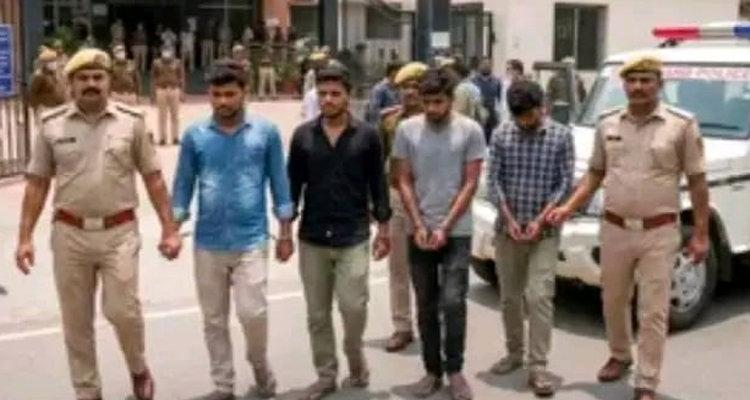
Ranchi: The Jharkhand CID has widened its crackdown on alleged irregularities in the JSSC Combined Graduate Level (CGL) examination, arresting four candidates who had successfully cleared the recruitment test. The latest action has shifted the investigation from alleged middlemen and insiders to the beneficiaries who are suspected of having used leaked examination material.
The four arrested candidates have been identified as Deepak Kumar, Vijay Kumar Tiwari, Anand Kumar Singh and Umesh Kumar Rai. Deepak, Vijay and Anand are from Dhanbad, while Umesh Kumar Rai was staying in Bokaro. The arrests were made by the CID’s Special Investigation Team (SIT) as part of its probe into alleged irregularities in the JSSC Graduate-Level Combined Competitive Examination-2023, held in September 2024.
From exam qualifiers to accused: CID follows the beneficiary trail
The latest arrests are significant because investigators are now examining not only those allegedly involved in leaking examination material but also candidates who may have benefited from it.
According to reports, the CID suspects that the arrested candidates obtained leaked questions through intermediaries after allegedly paying money. Investigators are now attempting to establish who supplied the material, how it reached the candidates and where the money ultimately went.
The development comes amid a rapidly expanding investigation. The CID had earlier arrested Abhay Tiwari, described as a key accused in the wider JPSC-JSSC examination irregularities case. His wife, Sushma Kumari, and brother, Akshay Tiwari, who had also cleared the JSSC-CGL examination, were arrested earlier this month.
₹12 lakh-for-65 questions allegation adds explosive dimension
The investigation took a dramatic turn after allegations emerged during the questioning of Abhay Tiwari.
According to the media reports ( by CID-related disclosure) , 15 candidates in Bokaro allegedly paid ₹12 lakh each, generating around ₹1.80 crore, in exchange for advance access to examination material. Investigators were reportedly told that around 65 questions and answers were made available before the examination.
These claims have not been treated as established facts against every candidate. The CID is continuing to verify the allegations, including the identities of beneficiaries and the flow of money.
Probe now reaches deeper into the examination machinery
The CID’s investigation has also begun examining people associated with the conduct of the examination. Two more accused, Somansh Prakash and Rahul Kumar, were recently arrested as investigators sought to uncover the wider network behind the alleged irregularities.
The sequence of arrests suggests that the probe is no longer limited to a suspected paper-leak episode. Investigators are attempting to reconstruct the entire chain—from the alleged source of confidential examination material and intermediaries to candidates who allegedly paid for and used it.
The case has also become politically and socially sensitive, with job aspirants demanding action over alleged examination irregularities. The Jharkhand government’s move to cancel several recruitment examinations, including the JSSC-CGL examination, has meanwhile faced a stay from the Jharkhand High Court after successful candidates challenged the cancellation.
Money trail could hold the key
For the CID, the four latest arrests could prove crucial in establishing the money trail and the alleged beneficiary network.
Investigators are expected to question the accused about their contacts with intermediaries, payments allegedly made for leaked material and the circumstances in which they obtained advance questions.
If the allegations are substantiated, the investigation could expose a much larger network operating around competitive examinations in Jharkhand.
For now, the four candidates remain accused and not convicted. The CID’s task is to establish, through evidence, whether they knowingly purchased or used leaked examination material and how far the alleged racket extended.
The bigger question now is no longer simply who leaked the paper—but who bought it, who supplied it and who ultimately profited from the alleged exam racket.