New Delhi: Pakistan was so determined to locate India’s Russian-made S-400 air defence systems during the May 2025 hostilities that it allegedly deployed spies and activated sleeper cells inside India, besides seeking satellite assistance from other countries, according to retired Air Marshal Jeetendra Mishra, who commanded the Indian Air Force’s Western Air Command during Operation Sindoor.
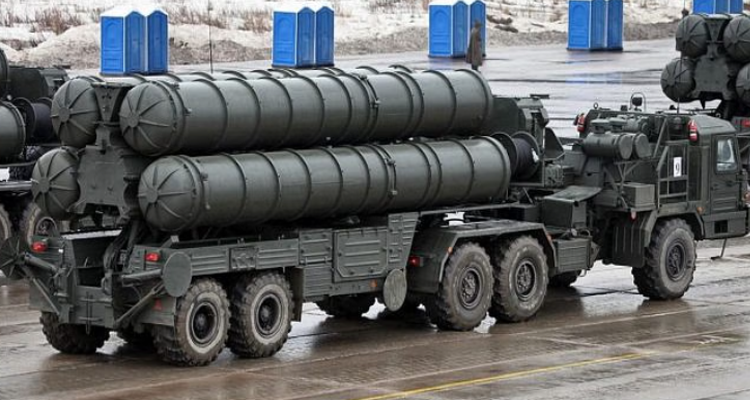
In a detailed interview with ANI, Mishra said the S-400 emerged as one of the biggest challenges for Pakistan’s air force during the conflict, forcing Islamabad to employ multiple intelligence-gathering methods to identify the location of the air defence batteries.
“They were desperate to find where these S-400s were,” Mishra said, adding that Pakistan used “every available means”, including satellite support and covert networks inside India. His remarks have now brought fresh attention to the intelligence battle that unfolded alongside the air and missile operations during Operation Sindoor.
Pak Activated Spies & Sleeper Cells To Hunt India’s S-400s During Op Sindoor: Retired Air Marshal
Watch: https://t.co/HAzZamqtGO pic.twitter.com/Yy52nqorYD— India Today Global (@ITGGlobal) August 28, 2026
S-400 became Pakistan’s biggest air threat
According to Mishra, the presence of the S-400 imposed severe operational restrictions on Pakistani fighter aircraft. He said Pakistani jets could not safely approach within roughly 200 kilometres of the Indian border because of the threat posed by India’s long-range air defence network.
The former Western Air Command chief described the S-400 as the “biggest threat” faced by Pakistan during the operation.
India signed an agreement with Russia in 2018 for five S-400 systems. Three units had already been inducted into the Indian Air Force, while a fourth squadron was delivered in June 2026.
BIG🔥
Pakistan Used Spies, Sleeper Cells to Find S-400s During Op Sindoor: Air Marshal Jeetendra Mishra pic.twitter.com/qZWLzJWIko— Manjeet Negi (@manjeetnegilive) August 28, 2026
314-km interception: S-400’s long-range punch
Mishra also offered details of what he described as one of the most dramatic air-defence engagements of Operation Sindoor.
He said the IAF first targeted Pakistan’s ground-based radar network and command-and-control infrastructure, including American-made AN/TPS-series radars in Punjab. With those systems damaged, Pakistan increasingly depended on airborne surveillance platforms, including AWACS aircraft, to maintain battlefield visibility.
According to Mishra, an AWACS operating from the Sargodha area was detected by an Indian S-400 battery. After seeking and receiving clearance to engage, the operator fired and intercepted the target at a reported distance of 314 kilometres.
Mishra described it as the longest surface-to-air kill in military history. DRDO material has separately referred to a 314-km S-400 engagement involving a Pakistani airborne early warning and control aircraft, describing it as a record-breaking surface-to-air kill.
The former Air Marshal said the engagement significantly changed the operational equation, giving India greater freedom to conduct strikes while restricting Pakistan’s ability to maintain aerial surveillance.
Pakistan’s radar network ‘blinded’
Mishra said the IAF’s initial attacks focused heavily on degrading Pakistan’s ability to detect and coordinate air operations.
“We destroyed all their radars,” he said, referring particularly to the AN/TPS-series systems, and added that two command-and-control centres were also hit.
With much of the ground-based surveillance architecture disrupted, Pakistan was forced to rely more heavily on airborne radar platforms, he said.
The loss of these capabilities, according to Mishra, created a major operational disadvantage for Pakistan and allowed Indian forces to operate with greater freedom during the later stages of the confrontation.
Conflict escalated after initial Indian strikes
Operation Sindoor followed the April 2025 Pahalgam terror attack, after which India launched precision strikes against terrorist infrastructure in Pakistan and Pakistan-occupied Kashmir on May 7.
Mishra said the confrontation could potentially have ended after the initial Indian strikes, but Pakistan chose to escalate.
He recalled that Pakistan initially launched a smaller wave of drones against the Adampur air base, which India neutralised. The attacks intensified on May 9, when Pakistan launched a much larger combination of drones and missiles.
Mishra also alleged that a long-range, GPS-guided drone struck a military hospital and a nearby civilian office, killing an airman and seriously injuring another person.
India hit 11 Pakistani military installations
The confrontation reached its most intense phase on May 10, when India struck 11 Pakistani military installations, according to Mishra. The targets included major facilities such as Nur Khan and Bholari airbases.
Pakistan subsequently sought a ceasefire, bringing the intense three-day confrontation to an end, according to accounts carried by multiple Indian media outlets.
Women fighter pilots flew multiple combat missions
Mishra also disclosed that women fighter pilots were involved in multiple combat missions during Operation Sindoor.
According to his account, women pilots participated in strikes against the Lashkar-e-Taiba facility at Muridke and later returned to carry out further missions against Pakistani airbases and command-and-control facilities on May 10.
The revelation adds another dimension to the operation, highlighting the role of women combat pilots in India’s offensive air operations.
A battle fought in the shadows
Mishra’s account portrays Operation Sindoor as more than a contest of missiles, aircraft and drones. Behind the visible battlefield was an intense intelligence struggle over India’s most valuable air-defence assets.
The former Western Air Command chief’s allegation that Pakistan activated spies and sleeper cells to locate S-400 batteries underlines the strategic importance of the system—and the extent to which concealing its positions became a critical part of India’s air-defence strategy.
While the claims about covert networks and satellite assistance come from Mishra’s account and should be treated as such, the reported 314-km S-400 engagement has also been referenced in official defence material, underscoring the system’s reported role in Operation Sindoor.