Proposal for 12–15 provinces sparks debate over governance, provincial autonomy and the military’s influence
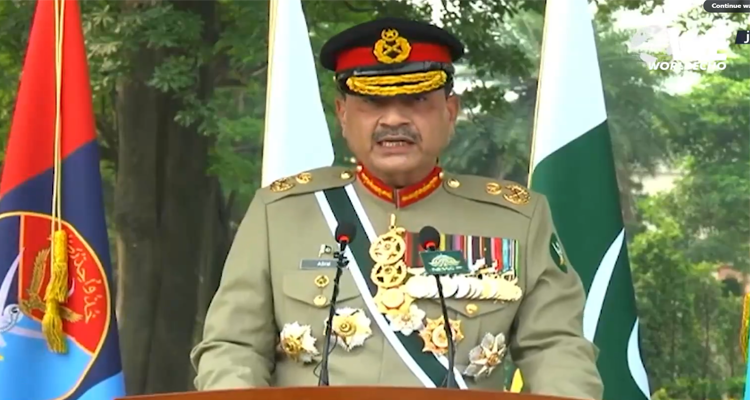
News Desk: Pakistan is witnessing a fresh debate over the restructuring of its provincial boundaries, with reports suggesting that Army Chief Field Marshal Asim Munir favours dividing the country’s four existing provinces into smaller administrative units.
According to media reports, the proposal could lead to the creation of 12 to 15 provinces. Another option reportedly under discussion involves reorganising the country into around 160 smaller administrative territories. However, no official confirmation has established that Munir has formally submitted or secured approval for such a plan.
Pakistan currently has four provinces—Punjab, Sindh, Khyber Pakhtunkhwa and Balochistan. Any major restructuring could significantly affect governance, political representation, resource distribution and the balance of power between the federal government and provincial administrations.
Governance Reform or Political Realignment?
Supporters of smaller provinces argue that decentralisation could improve administration, bring government services closer to citizens and address regional disparities. Smaller administrative units, they contend, could make governance more responsive to local needs and help neglected areas secure greater development attention.
Proposals for restructuring have included dividing Punjab into three provinces and Balochistan into two, while splitting Khyber Pakhtunkhwa into Pakhtun and Hazara regions. Some suggestions have also involved placing Karachi and Gwadar under federal administrative control. These remain proposals under discussion rather than adopted government policy.
Asim Munir Wants To Split Pakistan’s 4 Provinces Under ‘Divide And Rule’ Plan https://t.co/RDjQ1luJz8 https://t.co/vHFgt9EMk7
— NDTV World (@NDTVWorld) October 9, 2026
Punjab and Sindh at the Centre of the Debate
Punjab and Sindh are particularly significant because of their political influence. Punjab has traditionally been a major stronghold of the Pakistan Muslim League-Nawaz (PML-N), while the Pakistan Peoples Party (PPP) has a longstanding political base in Sindh.
Critics fear that dividing these provinces could weaken established regional power centres and strengthen the federal government and military establishment. However, these concerns reflect possible political consequences and do not independently establish the motives behind the reported proposal.
Sindh Assembly Rejects Division
Opposition to the proposed restructuring has emerged from provincial political institutions. On September 3, 2026, the Sindh Assembly unanimously adopted a resolution rejecting proposals to divide Sindh, alter its territorial boundaries or place any part of the province under a separate federal administrative arrangement.
The resolution emphasised Sindh’s historical identity and constitutional rights, maintaining that any changes to Pakistan’s federal structure must respect democratic consent and the wishes of the people concerned.
Opposition has also come from other political quarters. Pakistan Tehreek-e-Insaf (PTI) chairman Barrister Gohar Ali Khan has warned that a hurried decision on creating new provinces could weaken the federation. He has called for political consensus and consultations involving elected representatives before any restructuring is undertaken.
Constitutional Hurdles Ahead
Creating new provinces would require more than an administrative order. Under Article 239(4) of Pakistan’s Constitution, a constitutional amendment altering a province’s boundaries must receive the support of at least two-thirds of the total membership of the affected provincial assembly. Constitutional amendments also require a two-thirds majority in each house of Parliament.
The proposed changes could raise complex questions concerning natural resources, provincial revenues, water allocation, public services, government employment and political representation. Establishing new provincial administrations would also involve substantial expenditure at a time when Pakistan faces economic challenges.
A Test for Pakistan’s Federal Structure
The debate highlights two competing arguments. Advocates of smaller provinces believe decentralisation could improve governance and address regional inequalities. Opponents, however, fear that redrawing boundaries without broad political agreement could intensify regional tensions and undermine provincial autonomy.
The proposal has also renewed discussion about the military’s role in Pakistan’s political system. Any restructuring perceived as concentrating authority at the centre could encounter resistance from provincial governments and regional political parties.
For now, the reported plan remains a subject of political debate rather than an implemented policy. Whether Pakistan moves towards 12–15 provinces, smaller administrative territories or stronger local governance will depend on political negotiations, constitutional requirements and the acceptance of the affected regions.
The central question is whether creating smaller administrative units would improve accountability and public services while preserving Pakistan’s federal balance—or trigger another round of political disputes over power, identity and provincial rights.