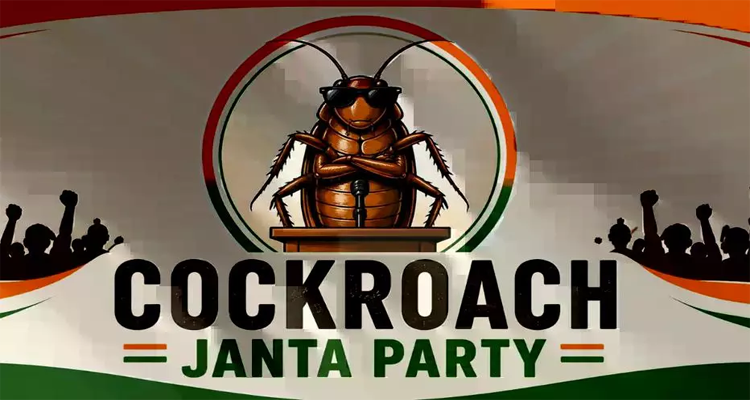
New Delhi: The Delhi High Court on Friday sought responses from the Centre and social media platform X after a petition filed by Cockroach Janta Party (CJP) founder Abhijeet Dipke challenged the blocking of the outfit’s X account. However, the court declined to order the immediate restoration of the account, observing that the matter carried wider legal and constitutional implications that required detailed examination.
The account was reportedly blocked on May 21 under Section 69A of the Information Technology Act, 2000, following inputs from the Intelligence Bureau (IB), which allegedly flagged concerns related to national security. Dipke has claimed that while he was informed about the action through an official communication, the actual blocking order has not yet been provided to him.
Hearing the matter, Justice Purushaindra Kumar Kaurav directed the Review Committee constituted under the IT framework to examine Dipke’s challenge and place its findings on record. The next hearing has been scheduled for July 7, after the court resumes following the summer vacation.
During the proceedings, senior advocate Akhil Sibal, appearing for Dipke, urged the court to restore the account pending final adjudication. He argued that if the government objected to specific posts, those individual posts could remain restricted while the rest of the account was reinstated. According to Sibal, similar interim measures had been adopted in previous cases involving social media restrictions.
#BreakingNews
Cockroach Janta Party: Delhi High Court declines to order immediate restoration of X accountRead here: https://t.co/YnmPEUxbew pic.twitter.com/orOIuJV6FW
— Bar and Bench (@barandbench) May 29, 2026
Solicitor General Tushar Mehta opposed the request, contending that restoring the account at this stage would effectively amount to granting relief on the merits of the case before hearing the government’s position. The court appeared to agree that the present dispute differed from earlier cases, noting that while some previous matters involved objectionable individual posts, the allegations in the current case related to the platform’s broader online activity.
“The issues have far-reaching ramifications,” the court observed, stressing that the matter required a holistic assessment after hearing all stakeholders. It also remarked that the legal framework governing social media blocking and digital free-speech disputes remains a developing area of law.
The court further referred to Rule 16 of the Information Technology (Procedure and Safeguards for Blocking for Access of Information by Public) Rules, 2009, which mandates confidentiality in blocking proceedings. Under the rule, authorities may restrict access to online content without necessarily notifying or hearing the content creator beforehand.
Sibal clarified that his client was not demanding that X disclose the blocking order publicly but maintained that the court should be informed about the basis of the government’s action. He also sought permission for Dipke, who is currently based abroad, to participate in future hearings through video conferencing. The court allowed the request and directed the Review Committee to examine the blocking order and submit its report.
The controversy comes amid the meteoric rise of the Cockroach Janta Party, a satirical online movement launched by Dipke on May 16 after remarks attributed to Chief Justice of India Surya Kant comparing certain unemployed youth involved in online activism to “cockroaches” and “parasites” sparked widespread debate. Though the Chief Justice later clarified that his comments had been misrepresented, the episode triggered a massive social media reaction.
Within days, the CJP gained extraordinary traction online, attracting millions of followers across platforms and emerging as a symbol of youth frustration over unemployment, exam paper leaks, inflation, and governance issues. International media reports have described the movement as one of the fastest-growing digital political phenomena in recent Indian politics.
The case is now expected to test the balance between national security considerations and the constitutional right to free expression in the digital age, with the Delhi High Court set to examine the legality and proportionality of the government’s action in the coming weeks.