
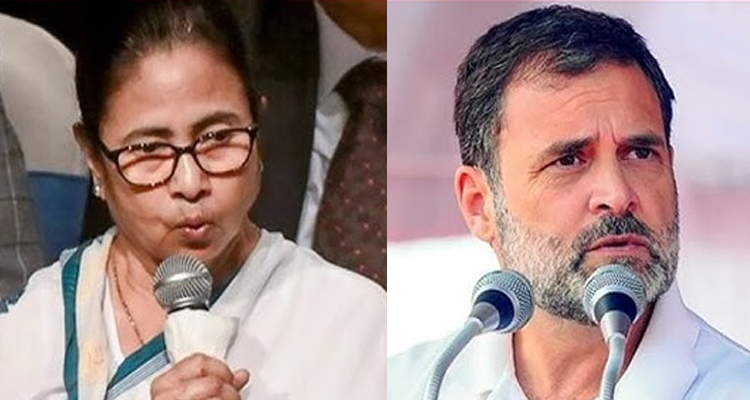
New Delhi/Kolkata: Signalling a decisive shift in its electoral strategy, the Congress has chosen to chart an independent course in the upcoming West Bengal Assembly elections, effectively ruling out any arrangement with the Trinamool Congress (TMC) or other regional partners. The move underscores a bold attempt by the party to reclaim political space in one of India’s most fiercely contested states.
After consultations between central leadership and state functionaries, the party resolved to contest all 294 Assembly constituencies on its own — a decision leaders said was essential for rebuilding organisational strength and reviving cadre morale at the grassroots.
“We will fight the elections independently and prepare our strategy accordingly,” according to party in-charge Ghulam Ahmed Mir, who indicated that the leadership wants to restore the party’s visibility and confidence among workers in the state.
A meeting was held between the top leadership of the Congress party and the leaders of the West Bengal Pradesh Congress Committee.
Important strategic discussions were held regarding the upcoming elections in West Bengal, during which everyone shared their suggestions.
After… pic.twitter.com/z0VyasoJ3T
— WB Youth Congress (@IYCWestBengal) February 5, 2026
Senior figures involved in the deliberations maintained that past electoral understandings had diluted Congress’s political identity and weakened its local network. By going solo this time, the party hopes to reassert itself as a standalone alternative in Bengal’s crowded political arena.
The recalibration follows the party’s disappointing showing in the 2021 Assembly elections, when its alliance experiment failed to translate into electoral gains — a setback that triggered introspection over coalition dependence in the state.
The announcement injects fresh unpredictability into the political landscape. Analysts expect a multi-cornered contest involving the ruling TMC, the BJP, the Left Front, and an assertively independent Congress, potentially reshaping vote equations across regions.
Political friction within opposition ranks has also shaped the decision. Signals from TMC leadership in recent months suggested little appetite for seat-sharing with Congress, highlighting strains within broader anti-BJP coordination efforts and pushing parties toward separate electoral paths in Bengal.
As the election cycle approaches, Congress’s solo gamble represents more than a tactical shift — it is a calculated bid to rebuild relevance in a state where it once held influence but now faces the challenge of reviving support from the margins.