
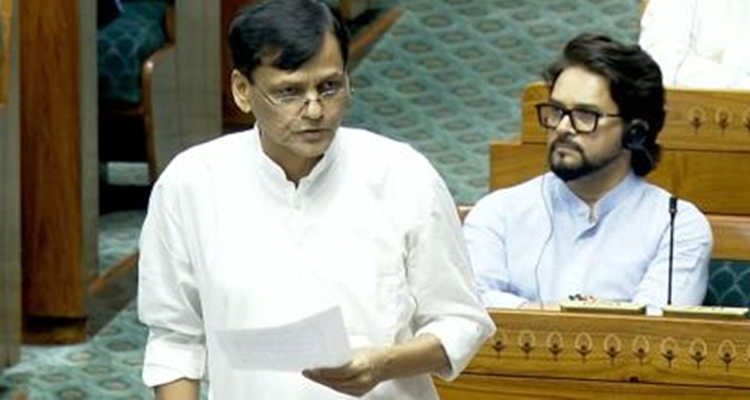
New Delhi: The Lok Sabha on Wednesday referred the Foreign Contribution (Regulation) Amendment Bill, 2026 (FCRA) to a 31-member Joint Parliamentary Committee (JPC) for detailed examination and wider consultations, putting the proposed changes to the law governing foreign funding under closer parliamentary scrutiny.
The motion to refer the Bill to the JPC was moved by Minister of State for Home Nityanand Rai. Under the proposed arrangement, the committee will have 21 members from the Lok Sabha and 10 from the Rajya Sabha. The Lok Sabha members will be nominated by the Speaker, while the Rajya Sabha members will be nominated by the Chairman. The committee is expected to submit its report to the Lok Sabha by the last day of the first week of the Winter Session.
Minister of State for Home Affairs @nityanandraibjp moved a motion in the Lok Sabha to refer the Foreign Contribution (Regulation) Amendment Bill, 2026 to a Joint Committee of Parliament (JPC).
The proposed Joint Committee will comprise 21 Members from the… pic.twitter.com/iTGrPA7NuM
— SansadTV (@sansad_tv) August 12, 2026
The Bill seeks to amend the Foreign Contribution (Regulation) Act, 2010 (FCRA), the principal law governing the receipt and utilisation of foreign contributions in India. The government has said the proposed changes are aimed at improving transparency, accountability and the overall administration of foreign contributions.
The Ministry of Home Affairs says the FCRA framework regulates foreign contributions and foreign hospitality to ensure that associations receiving such funds function consistently with the values of a sovereign, democratic republic and that foreign contributions are not used for activities detrimental to the national interest.
The 2026 amendment proposal was originally introduced in the Lok Sabha on March 25, 2026. According to a government background document, it is intended to address operational gaps that have emerged in the administration of the FCRA over the years. The government has characterised the proposed changes as administrative and governance-focused.
The move to send the Bill to a JPC is significant because the committee process will allow members of both Houses to examine the proposed provisions in greater detail and seek wider stakeholder views before the legislation moves forward.
The FCRA has long been a politically sensitive law because it governs how organisations, including non-governmental organisations and other associations, receive and utilise foreign funds. Under the existing framework, foreign contributions are subject to regulatory requirements relating to registration or prior permission, utilisation, maintenance of accounts and scrutiny by the authorities. The Ministry of Home Affairs has also been empowered to take action, including suspension or cancellation of registration, in cases of violations.
The referral came amid strong political debate over the proposed legislation. Opposition parties have raised objections to the Bill and demanded its withdrawal, while the government has defended the need for a stronger framework to regulate foreign funding. Reports from Parliament said the referral to the JPC took place amid opposition protests and disruptions.
The government’s decision to allow a broader parliamentary examination could therefore provide an opportunity to address concerns raised by different political parties and stakeholders while retaining the Bill’s stated objective of strengthening transparency and accountability in the foreign-contribution system.
The JPC’s eventual recommendations will be closely watched by NGOs, civil-society organisations, donors and other entities covered by the FCRA, as well as policymakers concerned with national security, financial transparency and the regulation of foreign funding.
For now, the Bill moves to the committee stage, meaning that no final legislative change has yet been made through the proposed 2026 amendments. The next major step will be the JPC’s detailed examination and its report to the Lok Sabha ahead of the Winter Session.