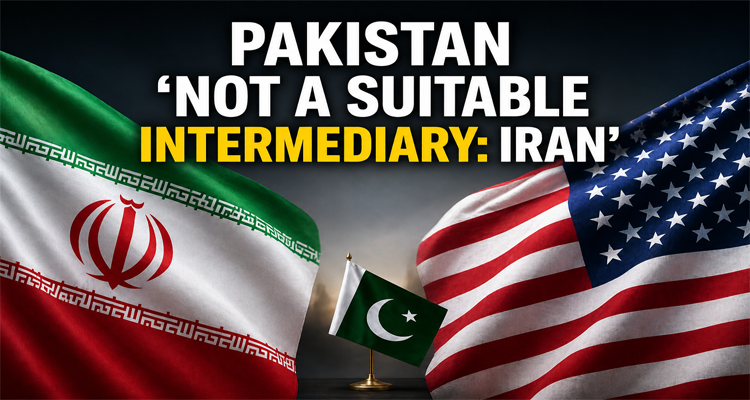
Tehran: A senior Iranian parliamentarian has publicly rejected Pakistan’s role as a mediator in the ongoing Iran–United States negotiations, calling it “not a suitable intermediary” amid a continuing diplomatic deadlock.
Ebrahim Rezaei, spokesperson for Iran’s National Security and Foreign Policy Commission, questioned Islamabad’s neutrality, suggesting that Pakistan lacks the credibility required to broker sensitive negotiations between Tehran and Washington.
Questions Over Neutrality
Rezaei stated that while Pakistan remains a friendly neighbour, its diplomatic posture is not sufficiently impartial. He alleged that Islamabad tends to align its approach with American interests, making it an unreliable facilitator in high-stakes talks.
The remarks reflect growing unease within Tehran over Pakistan’s balancing act between maintaining ties with Iran and sustaining its strategic relationship with the United States.
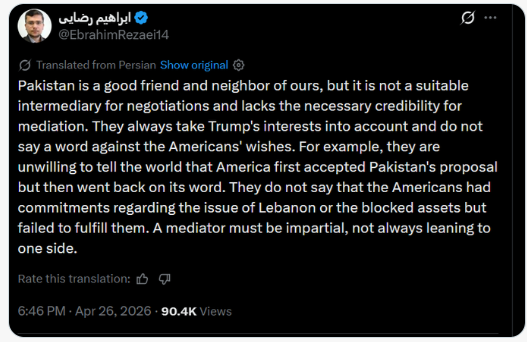
پاکستان دوست و همسایه خوب ماست اما واسطه مناسبی جهت مذاکرات نیست و اعتبار لازم را برای واسطهگری ندارد. آنها همیشه مصلحت ترامپ را در نظر میگیرند و برخلاف میل آمریکاییها حرفی نمیزنند بطور مثال حاضر نیستند به دنیا بگویند که آمریکا ابتدا پیشنهاد پاکستان را پذیرفت اما بعد زیر حرفش…
— ابراهیم رضایی (@EbrahimRezaei14) April 26, 2026
Talks Remain Deadlocked
The criticism comes at a time when indirect negotiations between Iran and United States remain stalled, with no major breakthrough in recent rounds of dialogue. Core issues continue to revolve around Iran’s nuclear programme, sanctions relief, and regional security concerns.
Efforts to revive talks through third-party mediation have so far failed to produce tangible results, further complicating the diplomatic landscape.
Allegations of Bias
The Iranian lawmaker also hinted at past instances where Pakistan, in Tehran’s view, did not assert an independent position during negotiations. He suggested that Islamabad’s reluctance to challenge Washington’s stance has contributed to a widening trust deficit.
Such statements underscore a broader perception in Iran that any mediator must demonstrate clear independence from major power influences—something Tehran believes Pakistan has not convincingly done.
Diplomatic Implications
The public criticism is likely to dent Pakistan’s efforts to project itself as a regional peace broker. It also signals increasing frustration within Iran over the slow pace of negotiations and the lack of progress through existing diplomatic channels.
Despite the tensions, indirect lines of communication between Tehran and Washington remain open. However, with trust eroding and positions hardening, the path to a negotiated breakthrough appears increasingly uncertain.