
Jerusalem: Advanced Israeli defence technologies have reportedly found their way into the military inventories of Qatar and Saudi Arabia, despite the absence of formal diplomatic relations between Israel and the two Gulf nations. A report by Israeli newspaper Haaretz, citing publicly available photographs and defence procurement documents, claims that the sophisticated equipment was supplied through contracts associated with major US defence manufacturers.
The revelations come as Israel’s defence exports reached a record $19.2 billion in 2025, reflecting surging global demand for its combat-tested military technologies.
Report Says Israeli Systems Reached Gulf States via US Contracts
According to the Haaretz investigation, Israeli-made defence equipment was integrated into aircraft and fighter jet programmes purchased by Qatar and Saudi Arabia from American defence companies. The report says the arrangements enabled Israeli technologies to reach the Gulf countries through subcontracting agreements rather than direct government-to-government arms sales.
The findings are based on procurement records, defence industry documents and publicly available images reviewed by the newspaper.
Israeli Elbit Systems and Israel Aerospace Industries sold hundreds of millions of shekels’ worth of missile defense systems and components for advanced jets to Saudi Arabia and Qatar | @oyoyoy https://t.co/q6mS27i5DG
— Haaretz.com (@haaretzcom) June 28, 2026
Qatari Royal Aircraft Equipped with Israeli Defence System
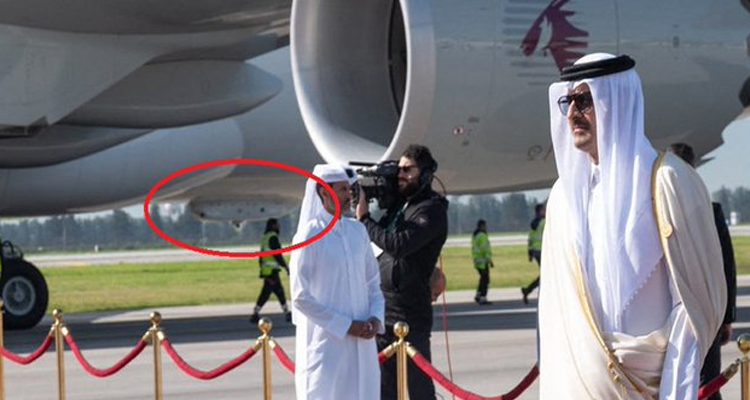
The report states that three of the 11 aircraft operated by Qatar’s royal family were fitted with Elbit Systems’ C-MUSIC airborne self-protection system between 2020 and 2022 while undergoing maintenance in Basel, Switzerland.
According to the report, one of these aircraft was used by Qatar’s Emir Sheikh Tamim bin Hamad Al Thani during his visit to Tehran last year.
The C-MUSIC (Commercial Multi-Spectral Infrared Countermeasure) system is designed to protect aircraft from shoulder-fired surface-to-air missiles. It combines radar sensors with a powerful directed laser to detect and divert incoming missile threats before impact.
The same Israeli-developed system is also installed on Israel’s official government aircraft, Wings of Zion, as well as on aircraft used by the French presidency, highlighting its reputation as a high-end airborne defence technology.
Israeli Technology Reportedly Installed on Qatar’s F-15 Fighter Jets
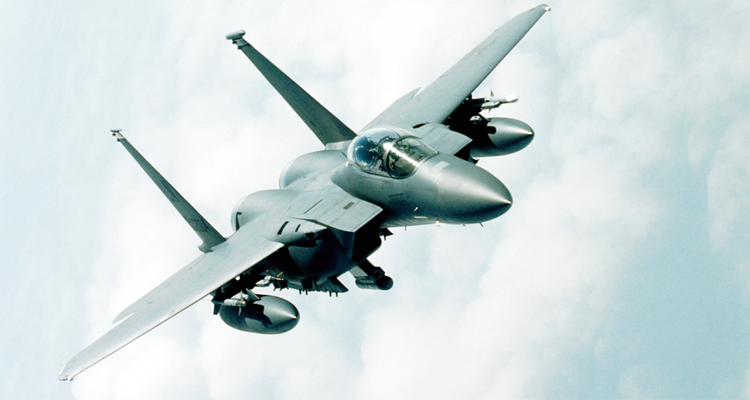
The report further claims that procurement documents linked to the 2017 US-Qatar agreement for the purchase of F-15QA Ababil fighter aircraft show Israeli companies securing subcontracts worth between $150 million and $250 million.
These contracts reportedly included the supply of 160 Joint Helmet Mounted Cueing Systems (JHMCS)—each valued at roughly $200,000—along with AN/AVS-9 night-vision goggles.
The JHMCS enables pilots to view targeting information and flight data directly on the helmet visor, allowing them to identify and engage targets without having to look down at cockpit instruments, significantly improving combat effectiveness during air operations.
Similar Equipment Reportedly Supplied to Saudi Arabia
The Haaretz report also cites a 2010 US Department of Defense notification indicating that Saudi Arabia received 462 JHMCS helmet systems and 462 AN/AVS-9 night-vision goggles as part of Boeing’s F-15SA fighter jet programme.
According to the newspaper, videos available online appear to show Saudi pilots using the Israeli-developed helmet-mounted systems during operational flights.
Israel’s Defence Exports Reach Historic High
Separately, Israel’s Ministry of Defence recently announced that the country’s defence exports climbed to a record $19.2 billion in 2025, an increase of nearly 30% over the previous year and the fifth consecutive annual record.
Official figures show that Europe accounted for 36% of exports, followed by the Asia-Pacific region (32%), the Middle East and North Africa (15%), and North America (13%).
Israeli Defence Minister Israel Katz attributed the surge to the battlefield performance of Israeli defence systems, saying recent military operations had significantly strengthened international confidence in Israeli technology.
Growing but Discreet Security Cooperation
Although Israel’s Defence Ministry does not publicly disclose the identities of all customers because of commercial confidentiality and national security considerations, defence analysts say the reported integration of Israeli technologies into US-built aircraft reflects the growing yet largely discreet security cooperation between Israel and several Gulf states.
The reported contracts also underscore the increasingly interconnected global defence supply chain, where advanced technologies from multiple countries are integrated into major military platforms exported worldwide.