
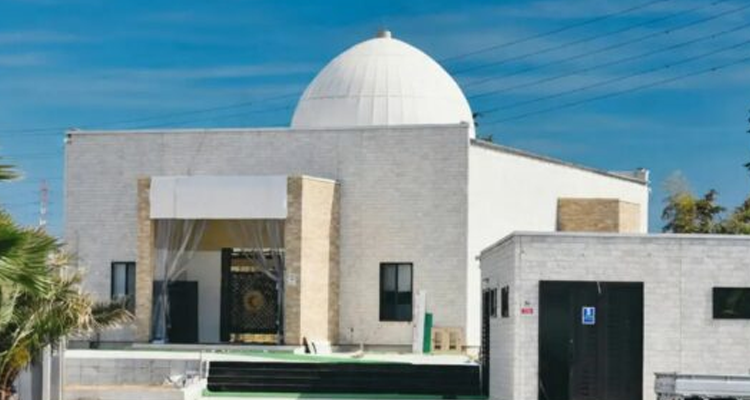
Tokyo: A newly built mosque in Japan’s Saitama Prefecture has landed at the centre of a legal dispute after local authorities ruled that the structure was constructed without the required permissions and must be removed. The development has sparked controversy, particularly after Pakistan’s ambassador to Japan attended the mosque’s inauguration earlier this year.
Mosque Built Without Required Permissions
The mosque, known as Japan Jaame Masjid Ramzan, was constructed in Kawagoe City, near Tokyo, on land reportedly owned by a Pakistan-linked organisation. Japanese authorities have stated that the building was erected without obtaining the approvals required under local land-use and urban planning regulations.
Officials said the mosque stands in an urbanisation control zone, where construction activities are subject to strict restrictions and special permissions. According to city authorities, those permissions were not secured before the project began.
Japan sees surge in anti-Muslim sentiment
Illegally built mosque in Japan’s Kawagoe faces demolition
Pakistan embassy distances itself from illegal mosque project @samikshaa3 brings you more details pic.twitter.com/2htAWZdZeK
— WION (@WIONews) June 3, 2026
Authorities Move Towards Demolition
Following an investigation, Kawagoe city officials concluded that the structure violated planning regulations and issued administrative guidance calling for corrective measures. Reports indicate that the authorities are pursuing the removal of the mosque, with demolition emerging as the most likely outcome if compliance is not achieved.
Japanese officials have stressed that the action is based solely on legal and zoning violations and not on religious considerations.
Pakistan Embassy Issues Clarification
The issue gained international attention because Pakistan’s Ambassador to Japan, Abdul Hameed, participated in the mosque’s inauguration ceremony in April.
However, after questions were raised about the legality of the construction, the Pakistani Embassy in Tokyo clarified that the ambassador had attended the event after organisers assured him that all necessary approvals had been obtained. The embassy subsequently distanced itself from the project and emphasized the importance of complying with Japanese laws.
Local Concerns and Public Debate
The controversy has triggered debate among local residents and members of the Pakistani community in Japan. Questions have been raised about how the project proceeded without regulatory approval and whether sufficient checks were conducted during construction.
The case has also highlighted broader challenges related to urban planning, land-use compliance and the management of community infrastructure projects in areas subject to strict development controls.
Not a Religious Issue, Say Authorities
Japanese authorities have repeatedly underlined that the dispute concerns planning regulations rather than religion. Officials maintain that all construction projects, regardless of their purpose or ownership, must comply with the same legal requirements.
Observers note that the case serves as a reminder that religious institutions, like all other developments, are subject to local laws governing land use and construction.
Impact on India-Pacific and Regional Discourse
While the controversy remains a local administrative matter, it has drawn wider attention across Asia due to Pakistan’s diplomatic association with the project. The incident has embarrassed Pakistani officials and reignited discussions about the responsibilities of overseas community organisations to adhere to host-country regulations.
For now, city authorities are expected to continue legal and administrative procedures aimed at removing the unauthorized structure unless the matter is resolved through compliance measures permitted under Japanese law.