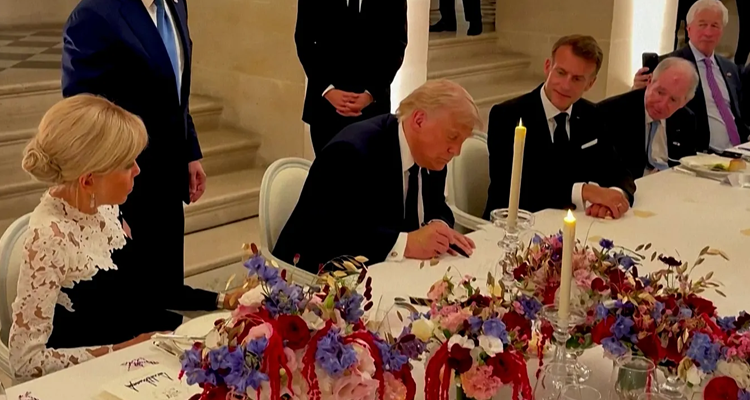
The moment President Trump signs the Iran deal at the Palace of Versailles.
The agreement was finalized during a dinner hosted by French President Emmanuel Macron inside the historic palace.
The signing marked a major diplomatic milestone after months of negotiations aimed at… pic.twitter.com/slt91WwA2O
— Fox News (@FoxNews) June 18, 2026
France: In a dramatic diplomatic breakthrough, US President Donald Trump and Iran finalized a landmark agreement at France’s iconic Versailles Palace, bringing an end to a 110-day conflict that rattled the Middle East and disrupted global energy markets.
The agreement was signed during a dinner hosted by French President Emmanuel Macron following the G7 Summit, marking an unexpected conclusion to months of military escalation between Washington, Israel, and Tehran.
Announcing the development, Macron said the deal could restore regional stability and facilitate the reopening of the Strait of Hormuz, one of the world’s most critical oil and shipping corridors.
Le Président Trump a signé ce soir à Versailles l’accord entre l’Iran et les États-Unis.
Cet accord ouvre la voie à une paix durable et permet la réouverture du détroit d’Ormuz.
C’est un pas important dans la bonne direction pour nos compatriotes… pic.twitter.com/b1XgZrBv0m
— Emmanuel Macron (@EmmanuelMacron) June 18, 2026
“President Trump signed tonight at Versailles the agreement between Iran and the United States. This agreement paves the way for lasting peace and allows the reopening of the Strait of Hormuz,” Macron posted on X, adding that the accord could help ease global energy prices in the months ahead.
President Donald J. Trump signs the Iran Memorandum of Understanding.
Peace through strength. pic.twitter.com/ZbdnxIkRT5
— The White House (@WhiteHouse) June 18, 2026
Tehran Confirms Deal, Awaits Implementation
Iran confirmed the signing of the document, describing it as a crucial step toward ending hostilities but stressing that the real challenge lies ahead.
“The text of the Islamabad Memorandum of Understanding has been finalized with the signatures of the presidents. Now it is time to test the implementation of the agreement,” Iranian Foreign Ministry spokesperson Esmaeil Baqaei said, according to state media.
The agreement had originally been scheduled for formal signing in Switzerland later this week, but negotiations concluded ahead of schedule. Tehran said planned talks in Geneva would still proceed.
60 Days to Negotiate Final Settlement
The accord, officially titled the Islamabad Memorandum of Understanding between the United States and the Islamic Republic of Iran, establishes a 60-day window for both sides to negotiate a comprehensive final peace agreement.
The memorandum calls for an immediate and permanent cessation of military operations across all fronts, including Lebanon, and outlines a roadmap for de-escalation.
Naval Blockade to Be Lifted
Under the terms of the deal, the United States will begin lifting its naval blockade of Iran within 30 days, allowing commercial shipping traffic to gradually return to normal levels.
The memorandum also provides for the withdrawal of US forces from areas near Iran within 30 days of a final agreement being reached.
In return, Iran has pledged to ensure the safe passage of commercial vessels through regional waters and to allow ships to transit free of charge for 60 days.
End of a 110-Day War
The agreement effectively ends a conflict that began on February 28, when US and Israeli forces launched strikes on Iranian targets, triggering one of the most serious Middle East confrontations in recent years.
While the Versailles signing marks a significant diplomatic victory for all parties involved, attention now shifts to whether Washington and Tehran can successfully implement the accord and secure a lasting peace over the next two months.