
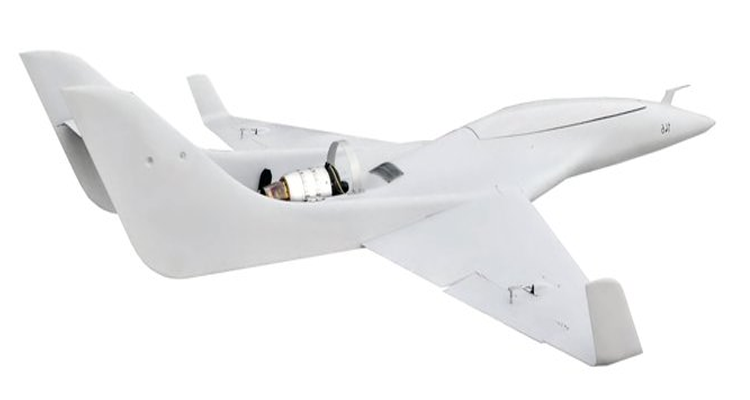
New Delhi: In a major boost to India’s precision-strike and unmanned warfare capabilities, the Indian Army has inducted 106 indigenous Peacekeeper (Agniveg) kamikaze drones, a new generation of jet-powered loitering munitions capable of striking targets up to 180 kilometres away at speeds of 450 kmph. Developed and delivered by Indian defence manufacturer SMPP Pvt. Ltd., the drones are designed to operate in heavily contested electronic warfare environments while maintaining accuracy and mission effectiveness.
The delivery includes 100 operational drones and six training variants, making it one of the largest inductions of domestically manufactured loitering munitions into the Army’s inventory. Defence experts view the move as a significant step in strengthening India’s indigenous defence manufacturing ecosystem while enhancing the Army’s ability to conduct deep precision strikes against high-value enemy targets.
A New Weapon for Modern Battlefields
The Peacekeeper (Agniveg) belongs to a class of weapons known as loitering munitions, often referred to as kamikaze drones. Unlike conventional drones that return after completing surveillance missions, these systems are designed to identify, track, and destroy targets by crashing into them with an onboard warhead.
The drones can be deployed against a wide range of strategic and tactical targets, including enemy command centres, radar stations, communication hubs, logistics facilities, missile batteries, and air-defence systems. Their ability to strike deep inside hostile territory gives commanders a rapid-response precision weapon that fills the gap between artillery fire and expensive missile systems.
180-km Range and 450 kmph Speed
One of the most striking features of the Peacekeeper drone is its combination of long range and high speed.
Powered by a turbojet engine, the drone can reportedly engage targets located up to 180 kilometres away while travelling at speeds of approximately 450 kilometres per hour. This enables it to reach enemy positions quickly, reducing reaction time and increasing the chances of mission success.
Its speed also makes interception more difficult compared to conventional propeller-driven drones, offering a significant operational advantage in contested battle zones.
Built to Defeat Jamming and Electronic Warfare
Modern conflicts increasingly involve attempts to disable drones through electronic warfare systems capable of jamming or spoofing navigation signals. The Peacekeeper (Agniveg) has been specifically designed to counter such threats.
According to the manufacturer, the drone can operate effectively in heavily jammed and spoofed environments without deviating from its assigned target. This capability ensures mission continuity even when adversaries attempt to interfere with navigation and communication systems.
As electronic warfare becomes a defining feature of modern combat, such resilience is expected to make the platform particularly valuable in future military operations.
WOW WOW!! Out of the blue! Just super 😍😍😍
India’s SMPP Completes Delivery of 106 Jet Based Kamikaze Drones ‘Agniveg’ to Indian Army
The delivery follows successful user trials in which the Peacekeeper (Agniveg) demonstrated a Circular Error Probable (CEP) of less than 5… pic.twitter.com/UtbF3p9HYn
— Vayu Aerospace Review (@ReviewVayu) June 11, 2026
High Precision Strike Capability
Before being inducted into service, the drone underwent extensive user trials with the Indian Army. During evaluations, the system reportedly achieved a Circular Error Probable (CEP) of less than five metres, demonstrating a high degree of accuracy.
The precision capability allows military planners to engage strategic targets while minimizing collateral damage, making the drone suitable for both tactical battlefield operations and high-value strategic missions.
The Indian Company Behind the Drone
The Peacekeeper (Agniveg) has been developed by SMPP Pvt. Ltd., one of India’s leading private-sector defence manufacturers.
Headquartered in New Delhi, SMPP has built its reputation as a major supplier of ballistic protection systems, including bulletproof jackets, combat helmets, vehicle armour solutions, and personal protection equipment used by the Indian Armed Forces and security agencies.
Over the past decade, the company has expanded beyond protective equipment into advanced defence technologies such as unmanned aerial systems, counter-drone solutions, smart ammunition, and precision-strike platforms. The successful induction of the Peacekeeper drone fleet marks SMPP’s emergence as a significant player in India’s growing drone warfare industry.
The company has invested heavily in research, development, and indigenous manufacturing capabilities to support the country’s drive toward defence self-reliance. Defence analysts believe the delivery of 106 advanced loitering munitions demonstrates the increasing ability of Indian private-sector firms to develop sophisticated combat systems that can meet modern battlefield requirements.
Boost for Atmanirbhar Bharat
The induction of the Peacekeeper drones is also being viewed as a major milestone for India’s Atmanirbhar Bharat initiative in the defence sector.
India has been steadily increasing domestic defence production while reducing dependence on imported military hardware. The successful development and deployment of advanced loitering munitions by an Indian company highlight the growing maturity of the country’s defence-industrial ecosystem.
With conflicts around the world underscoring the importance of drones and autonomous strike systems, indigenous platforms such as the Peacekeeper are expected to play an increasingly important role in India’s future military doctrine.
Strengthening India’s Drone Warfare Arsenal
Recent conflicts in Europe, the Middle East, and elsewhere have demonstrated how loitering munitions can destroy expensive military assets at a fraction of the cost of traditional weapon systems. Tanks, radar installations, missile launchers, and command centres have all proven vulnerable to precision drone strikes.
For the Indian Army, the induction of 106 Peacekeeper (Agniveg) drones provides a potent new capability that combines speed, precision, autonomy, and survivability. With the ability to strike targets 180 kilometres away, operate in electronic warfare environments, and deliver highly accurate attacks, the drones are expected to become a key component of India’s evolving battlefield strategy.
As warfare increasingly shifts toward autonomous systems and precision engagement, the arrival of the Peacekeeper fleet signals India’s determination to remain at the forefront of next-generation military technologies while strengthening indigenous defence manufacturing.