New Delhi: The Bharatiya Janata Party (BJP) has given its digital communication machinery a major makeover, replacing longtime IT Cell chief Amit Malviya with Chhattisgarh-based leader Deepak Mhaskey.
The change is part of a broader restructuring of the BJP’s national organisation under party president Nitin Nabin. Malviya’s exit from the post comes after more than a decade at the centre of the BJP’s digital operations and at a time when political campaigns are increasingly being shaped by Instagram videos, memes and other short-form content.
End of an 11-year digital era
Malviya had led the BJP’s IT Cell since 2015 and became one of the most prominent faces of the party’s online communication strategy.
His tenure coincided with the rapid expansion of the BJP’s presence across social-media platforms, particularly X, Facebook and WhatsApp. He frequently took on opposition leaders and political rivals through social-media posts and was closely identified with the party’s aggressive online messaging.
His replacement marks a significant change in the leadership of one of the BJP’s most closely watched organisational wings.
Malviya, after the announcement, congratulated Mhaskey and the incoming team, signalling a smooth transition rather than a public confrontation over the change.
BJP IT Cell Gets New Chief After 11 Years
BJP appoints Deepak Mhaskey as its new IT Cell chief, replacing Amit Malviya after 11 years. A former Chhattisgarh IT Cell chief and party spokesperson, Mhaskey is expected to lead the BJP’s digital, social media and tech-driven… pic.twitter.com/oEtsLBVjzE
— TIMES NOW (@TimesNow) August 18, 2026
Why the reshuffle has attracted attention
The timing of the move has triggered considerable political interest.
The BJP’s organisational overhaul comes in the wake of recent youth-driven political mobilisation in which social media emerged as a major force. Reuters reported that protests over the NEET examination controversy were amplified extensively online, with younger users relying heavily on digital formats to build momentum.
Unlike traditional political campaigns centred on speeches, posters and long-form statements, the recent wave of online mobilisation has demonstrated the speed with which memes, reels, viral videos and user-generated content can influence a political narrative.
However, there is no official statement from the BJP establishing that Malviya’s replacement was a direct consequence of the protests. Reuters reported the organisational change as part of the BJP’s wider restructuring, while the timing has inevitably fuelled speculation about the party’s digital strategy.
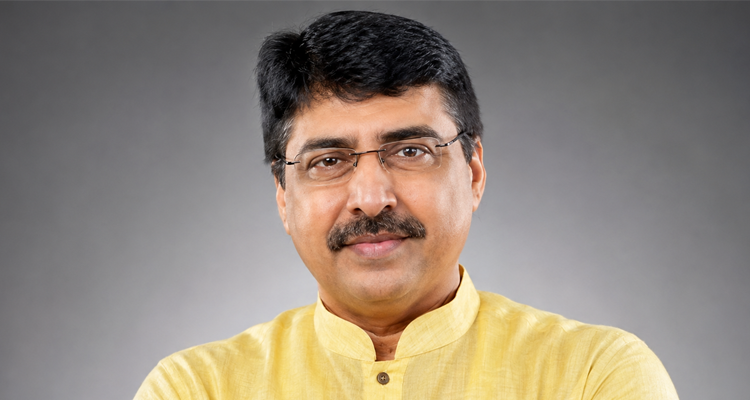
Meet Deepak Mhaskey
The BJP’s choice of Mhaskey brings a distinctly different professional profile to its national digital leadership.
A postgraduate in Chemistry, Mhaskey began his professional career in academics as a college professor. He subsequently developed experience in agriculture, horticulture and political organisation.
His association with the BJP goes back to the late 2000s. He has also worked in the party’s IT and social-media ecosystem in Chhattisgarh and has experience in electoral data and campaign-related work.
His background in analysing electoral information could prove particularly relevant as political parties increasingly combine conventional campaigning with data-driven digital outreach.
From classroom to political data
Mhaskey’s career has crossed several fields.
Apart from teaching Chemistry, he has been associated with agriculture and organic farming. He also served as an independent director of Engineers India Ltd, a public-sector engineering consultancy.
His public-sector experience includes his current association with the Chhattisgarh Medical Services Corporation Ltd. Media reports have also highlighted his involvement in electoral data analysis and BJP campaign work in several states.
That combination of academic, organisational and data-related experience makes his appointment different from the conventional image of a social-media strategist.
BJP looks beyond the X-era playbook
Perhaps the biggest question surrounding the change is not simply who replaced Malviya, but what kind of digital politics the BJP wants to pursue next.
For years, X was one of the principal battlegrounds for political messaging in India. But the social-media ecosystem has changed considerably. Younger audiences increasingly consume political information through short videos, reels, visual explainers, memes and creator-driven content.
The BJP’s latest move comes against that backdrop.
Mhaskey has indicated that the party intends to strengthen its engagement with internet users through newer digital formats, including reels.
A new digital team takes shape
Mhaskey will work with a newly constituted social-media team that includes Priti Gandhi, Shivanand Dwivedi, Alok Bhatt and Arun Yadav as co-convenors.
The broader restructuring is being viewed as an attempt by the BJP’s new national leadership to bring fresh faces into key organisational positions while retaining experienced political hands elsewhere.
The real challenge ahead
Malviya’s departure does not necessarily mean the BJP is abandoning the digital strategy developed during his tenure. Instead, the change could signal an attempt to update that strategy for a rapidly evolving social-media environment.
The challenge before Mhaskey will be to connect the BJP’s established digital network with audiences that increasingly prefer informal, visual and fast-moving online content.
The political battlefield has moved well beyond party websites and X posts. Instagram reels, memes, influencers and user-generated videos are now shaping political conversations at unprecedented speed.
For the BJP, the appointment of Deepak Mhaskey could therefore represent more than a change of personnel—it may be an effort to rewrite its digital playbook for the next generation of voters.
Whether the new team can translate that organisational change into stronger engagement with young social-media users will become clear only in the political contests ahead.