
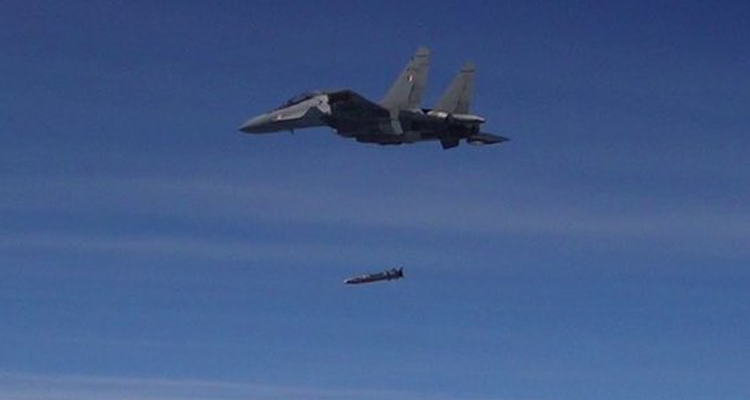
RudraM-II anti-radiation missile designed to destroy enemy radars
New Delhi: In a significant boost to India’s indigenous defence capabilities, the Defence Research and Development Organisation (DRDO) and the Indian Air Force (IAF) have successfully conducted flight tests of the indigenously developed RudraM-II Air-to-Surface Missile from an airborne platform.
The successful trial marks another milestone in India’s journey towards self-reliance in advanced defence technologies and precision-strike weapon systems.
Missile Performs Flawlessly Under Extreme Conditions
According to the Ministry of Defence, the RudraM-II missile was tested under extreme release conditions and along a critical flight trajectory. The trial validated the performance of all major subsystems, including guidance, navigation, control, and targeting mechanisms.
After being released from the aircraft, the missile accurately navigated towards a pre-designated target and struck it with pinpoint precision. All mission objectives were achieved successfully during the test.
The missile’s performance was closely monitored through a network of sophisticated tracking and telemetry instruments deployed by the Integrated Test Range (ITR) at Chandipur, Odisha. Data collected during the flight confirmed the missile’s accuracy and operational effectiveness.
RudraM-II, Air-to-Surface Missile was successfully tested by #DRDO and @IAF_MCC from Airborne Platform. The tests were conducted under extreme release conditions with critical trajectory establishing the capability of all subsystems. pic.twitter.com/ED6DZK4hz7
— DRDO (@DRDO_India) June 2, 2026
What is RudraM-II?
RudraM-II is an advanced indigenous air-to-surface missile developed by DRDO to enhance the Indian Air Force’s stand-off strike capabilities. The missile is designed to engage and destroy a wide range of enemy assets, including radar stations, command-and-control centres, air defence systems, and other high-value targets.
The weapon enables fighter aircraft to launch attacks from safe distances, reducing exposure to hostile air-defence networks while maintaining high levels of accuracy and effectiveness.
The missile is expected to play a crucial role in Suppression of Enemy Air Defences (SEAD) missions, a key requirement in modern warfare.
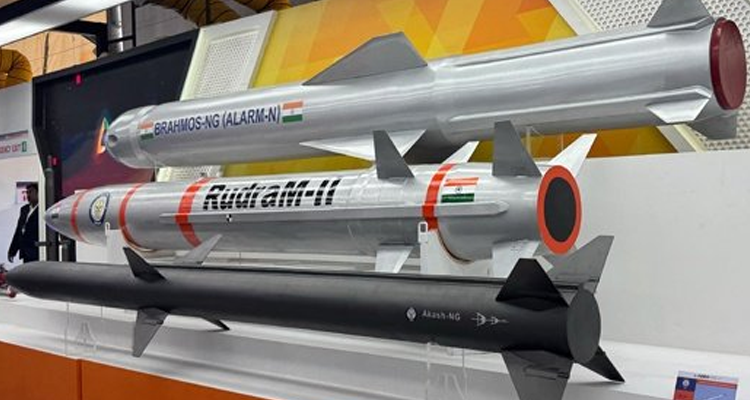
Major Boost to India’s Defence Modernisation
The successful flight test comes as India continues to strengthen its indigenous defence manufacturing ecosystem under the Aatmanirbhar Bharat initiative.
Over the past decade, India has accelerated the development of home-grown missile systems, combat platforms, and defence technologies aimed at reducing dependence on foreign suppliers. The RudraM-II programme represents a major achievement in this broader effort.
Defence experts believe the missile will significantly enhance the IAF’s ability to conduct precision strikes against heavily defended targets while improving mission flexibility and survivability.
Rajnath Singh Congratulates DRDO and IAF
Defence Minister Rajnath Singh congratulated DRDO, the Indian Air Force, Defence Public Sector Undertakings (DPSUs), development-cum-production partners, and industry stakeholders involved in the programme.
He said the successful tests demonstrate the growing maturity of India’s indigenous defence technologies and mark an important step towards achieving self-reliance in advanced weapon systems.
The achievement also reflects the increasing synergy between India’s defence research establishments, armed forces, and domestic industry in developing next-generation military capabilities.
Strengthening India’s Strategic Deterrence
The successful validation of RudraM-II adds another powerful weapon to India’s expanding indigenous missile arsenal, which includes systems such as BrahMos, Akash, and Astra.
As regional security challenges continue to evolve, the development of advanced indigenous weapon systems like RudraM-II is expected to further strengthen India’s strategic deterrence and operational readiness.
The latest success reinforces India’s growing reputation as a developer of sophisticated defence technologies and underlines the country’s commitment to building a modern, self-reliant military force.