
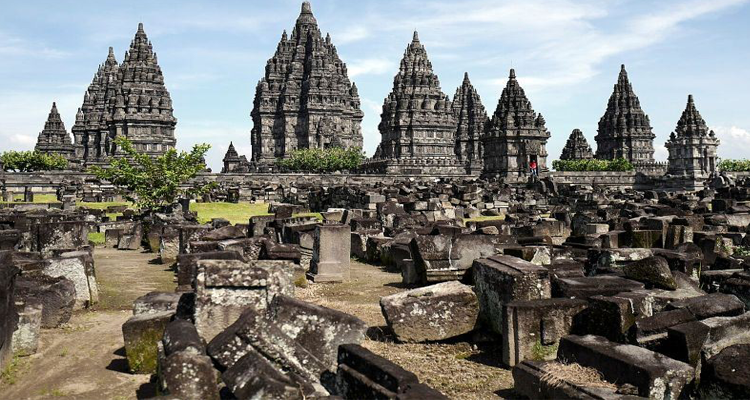
Yogyakarta (Indonesia): In a landmark initiative aimed at preserving one of Southeast Asia’s greatest symbols of shared civilizational heritage, India and Indonesia are set to jointly restore the iconic Prambanan Temple Complex, a UNESCO World Heritage Site that has stood for over a millennium.
The restoration project is expected to be formally launched during Prime Minister Narendra Modi’s visit to Yogyakarta with Indonesian President Prabowo Subianto. The move marks a significant milestone in the rapidly expanding India-Indonesia strategic partnership, extending cooperation beyond defence and trade into cultural heritage conservation.
#WATCH | प्रधानमंत्री @narendramodi ने घोषणा की कि भारत और इंडोनेशिया संयुक्त रूप से यूनेस्को विश्व धरोहर स्थल प्रम्बानन (Prambanan) मंदिर के संरक्षण के लिए एक विशेष परियोजना शुरू करेंगे।
लगभग 1,000 वर्ष पुराने और दुनिया के सबसे बड़े हिंदू मंदिर परिसरों में शामिल इस धरोहर के… pic.twitter.com/58U0v7iWik
— डीडी न्यूज़ (@DDNewsHindi) July 7, 2026
Prambanan, built around the 9th century during the Mataram Kingdom, is Indonesia’s largest Hindu temple complex and one of the finest examples of Hindu architecture anywhere in the world. Dedicated primarily to Lord Shiva, the sprawling complex originally comprised around 240 temples, with its soaring 47-metre Shiva Mahadeva Temple forming the architectural centerpiece. The temple compounds were inscribed as a UNESCO World Heritage Site in 1991 for their outstanding universal value.
Restoration to Be Led by ASI Experts
The conservation work will be undertaken in collaboration with Indonesia’s cultural authorities and experts from India’s Archaeological Survey of India (ASI), which has earned global recognition for restoring ancient monuments using scientific conservation techniques. The project will employ the internationally accepted anastylosis method, wherein original stones are carefully reassembled to preserve the monument’s historical authenticity.
The initiative follows discussions between Indonesian Culture Minister Fadli Zon and an ASI delegation earlier this year, during which both countries agreed to deepen cooperation in safeguarding their shared cultural legacy.
#WATCH | At Indonesia’s Prambanan Temple Complex, the timeless story of the #Ramayana comes alive through intricate stone carvings that have endured for over a thousand years.
The relief panels depicting Lord Rama, Sita, Lakshmana and Hanuman stand as a lasting symbol of the… pic.twitter.com/d9w0yrzb5O
— PB-SHABD (@PBSHABD) July 7, 2026
Symbol of Shared Civilizational Heritage
Beyond its architectural grandeur, Prambanan stands as a living testament to the centuries-old cultural links between India and the Indonesian archipelago. Its intricately carved stone reliefs narrate episodes from the Ramayana, an epic that continues to occupy a central place in Indonesian performing arts through the world-famous Ramayana Ballet staged against the backdrop of the illuminated temple complex.
Although Indonesia today has the world’s largest Muslim population, the country continues to preserve numerous Hindu and Buddhist monuments that reflect its rich pre-Islamic heritage. Prambanan remains an active place of worship for Hindus, especially during festivals such as Maha Shivaratri, while attracting millions of domestic and international visitors annually.
A Monument Shaped by Time
Over the centuries, Prambanan has endured volcanic activity, earthquakes and prolonged periods of abandonment. Major restoration efforts began under the Dutch colonial administration in the early 20th century and continued after Indonesia’s independence. However, hundreds of subsidiary shrines remain in varying stages of reconstruction, making the new India-Indonesia collaboration both timely and significant.
Heritage Diplomacy Gains Momentum
The restoration initiative reflects New Delhi’s growing emphasis on cultural diplomacy in Southeast Asia under its Act East Policy. By helping preserve one of Indonesia’s most revered Hindu monuments, India seeks to reinforce the deep historical, spiritual and cultural connections that have linked the two nations for more than a thousand years.
Officials view the conservation partnership as more than an archaeological project—it is expected to strengthen people-to-people ties while complementing the expanding cooperation between the two countries in defence, maritime security, digital technology, trade and investment.
As restoration work begins, the Prambanan Temple Complex is poised to become not only a symbol of Indonesia’s rich heritage but also a lasting monument to the enduring friendship between India and Indonesia.