
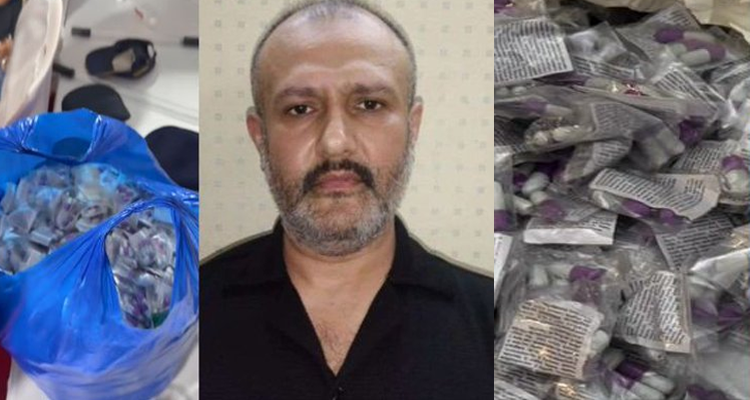
Mumbai: In a dramatic intervention, the Mumbai Police on Friday claimed to have thwarted an alleged mass poisoning attempt during a Muharram Ashura procession after arresting a man accused of distributing capsules laced with a highly toxic substance.
The accused, identified as Fayyaz Premji, was detained near Rehmatabad Cemetery at Reay Road after several procession participants reportedly fell ill upon consuming capsules he allegedly handed out as “painkillers” or “immunity boosters.”
According to police, 11 people experienced symptoms such as stomach pain and vomiting after ingesting the capsules and were rushed to a nearby hospital. Officials later confirmed that all of them are now out of danger.
Mumbai Police busts mass poisoning plan during Muharram, seizes 14,900 poison capsules; 1 arrested
Mumbai Police has foiled an alleged plot to target participants in a Muharram procession after arresting a man accused of planning to distribute capsules allegedly laced with zinc. pic.twitter.com/i7CobKtIMd
— Shakeel Yasar Ullah (@yasarullah) June 27, 2026
Capsules Contained Rat Poison Chemical
Preliminary forensic analysis found that the seized capsules contained zinc phosphide, a highly poisonous chemical commonly used in rat poison. The compound is known to release toxic phosphine gas inside the stomach, which can cause severe damage to the heart, lungs, liver, kidneys and other vital organs, and can be fatal if consumed in significant quantities.
Deputy Commissioner of Police Jayant Meena said the accused had no legal authorisation to distribute medicines during the religious procession.
During interrogation, police claimed the accused allegedly confessed that he intended to cause mass casualties by distributing the toxic capsules. According to investigators, he allegedly told officials that he wanted to kill at least 15,000 people participating in the procession.
However, authorities clarified that the alleged confession has not yet been independently verified in court, and investigators are continuing to examine the motive behind the suspected act.
A local court has remanded the accused to two days of police custody for further interrogation.
Mumbai में मोहर्रम जुलूस में Painkiller बताकर बांटी जा रही थी मौत! हजारों जहरीले कैप्सूल थे तैयार
मुंबई में मुहर्रम के जुलूस के दौरान जहरीले कैप्सूल बांटने का मामला सामने आया। पुलिस ने बताया कि आरोपी दर्द में राहत देने के नाम पर यह कैप्सूल देने की कोशिश कर रहा था। फिलहाल पुलिस… pic.twitter.com/rXPLlsvxhs
— Asianetnews Hindi (@AsianetNewsHN) June 28, 2026
Police credited the alertness of three women volunteers deployed during the Muharram procession for preventing what could have been a far more serious tragedy.
One of the volunteers reportedly noticed Premji distributing capsules in a suspicious manner and, along with two others, confronted him before alerting police personnel stationed nearby.
Authorities immediately issued public announcements through loudspeakers, warning participants not to consume the capsules. When questioned, the accused allegedly claimed the capsules were immunity boosters. Suspicious volunteers reportedly opened one capsule, discovered powder inside, and informed the police, leading to his immediate detention.
Police recovered approximately 14,900 capsules from the accused, while investigators believe a number had already been distributed before he was intercepted.
Investigators said they have also recovered evidence indicating that the accused had allegedly ordered 30,000 empty capsules and 50 kilograms of phosphorus-related material, prompting police to explore whether a larger conspiracy was being planned.
Senior officials said the accused, a BBA graduate, had previously travelled to Iran and Iraq. Investigators are examining whether the case has any terror links or whether additional individuals were involved.
A case has been registered at Byculla Police Station under relevant provisions of the Bharatiya Nyaya Sanhita (BNS), including Section 123, which pertains to causing hurt by administering poison with intent to commit an offence.
The seized capsules have been sent for detailed forensic examination, while police continue to investigate the source of the toxic substance and the accused’s alleged motive.
Know about Zinc Phosphide
Zinc phosphide is a potent toxic compound widely used in rodent-control products. Once swallowed, it reacts with stomach acid to produce phosphine gas, a deadly poison capable of causing rapid multi-organ failure.
Medical experts say there is no specific antidote for zinc phosphide poisoning. Patients require immediate hospitalisation, intensive supportive treatment, continuous monitoring and, in severe cases, ventilator support to improve survival chances.